




Download PDF File – Monthly Summary of Key Events in Karenni (May 2026)
Future Prospects for Refugees and Refugee Camps Along the Thai–Myanmar Border as Camps Move Toward Closure
Kantarawaddy Times
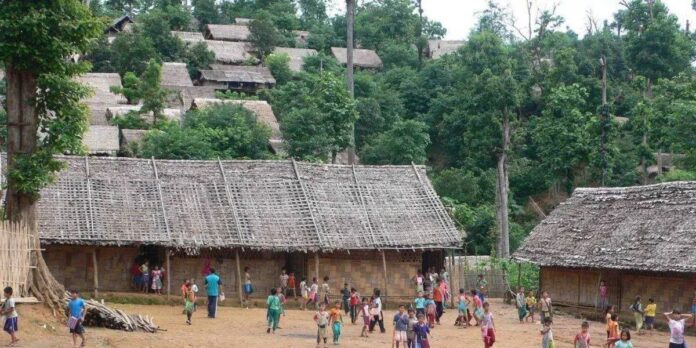
The Thai government is currently working toward the permanent closure of refugee camps along the Thai–Myanmar border. Authorities have already begun implementing part of the plan, according to an observer monitoring refugee affairs on the border.
Following the suspension of U.S. aid, one component of the plan is to allow Myanmar refugees, who have lived along the Thai border for more than four decades with support from international donors, to work legally and become self-reliant.
At the same time, since legal work permits were granted to refugees in October 2025, the number of refugees leaving the two Karenni refugee camps in Mae Hong Son Province to work remains low as of May 2026. As a result, authorities are now working to increase the employment rate, according to a member of a refugee camp committee.
Beginning in mid-May 2026, Thai authorities imposed strict restrictions on the movement of refugees who do not yet possess legal work authorization documents, preventing them from leaving the camps.
A refugee camp committee member explained that anyone wishing to travel outside the camp must now find a Thai employer and obtain a labor card and the so-called “pink card,” a 10-year identification card.
A woman living in Karenni Refugee Camp No. 1 said that while these restrictions encourage more people to obtain legal work documents, there are also some challenges.
“The positive side is that it feels much safer to go outside and work. Before, when people left the camp to work without legal documents to support their families, they worried about being arrested.
That concern might be reduced now. But on the negative side, I think the biggest challenge is the language barrier. Most camp residents don’t have much opportunity to learn Thai. Some people know the basics, but for many it is still very difficult, especially when it comes to speaking the language,” she said.
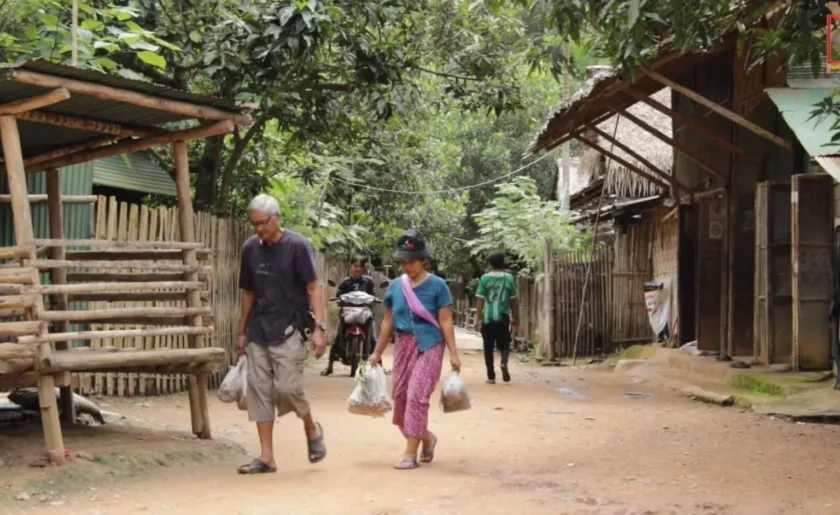
Following the suspension of U.S. assistance, Thai authorities began developing plans related to Myanmar refugees in 2025. In August 2025, they drafted a three-stage strategy, which are a short-term emergency fundraising plan, a medium-term plan to provide employment opportunities for refugees, and a long-term plan to close the border refugee camps.
“For the short-term work plan, it hasn’t been a full year yet since last October. We are now reviewing the progress. In the medium term, over one to five years, the plan is to consolidate camps. In our case, the two Karenni refugee camps, Ban Mai Nai Soi and Ban Mae Surin, would be merged into one. In the long term, there would no longer be refugee camps,” a male member of the Karenni refugee camp committee explained.
However, he added that refugees who are unable to work or who have special needs would be accommodated together in a designated area and continue to receive support from Thai authorities.
According to a border refugee affairs observer, the plan to close the camps does not appear to be linked to any effort to forcibly return Myanmar refugees to Myanmar. While camp closure may create new opportunities for refugees, it also generates concerns.
“One positive side is that camp residents who possess UN refugee documentation may be able to legally marry Thai citizens living in border areas. This could benefit their future children, who may become Thai citizens and gain access to education, healthcare, and legal protections. That is an important advantage. But the downside is that many refugees have lived in the camps with international aid for many years. Suddenly having to survive independently, earn their own living, and take responsibility for themselves can be very difficult. There will be psychological impacts, especially during the initial transition period,” a refugee affairs observer said.
Historically, children born to Myanmar refugees inside the camps have not received Thai birth certificates. Those whose parents possess refugee documentation issued by the United Nations had their children registered with the UN.
Camp officials believe that by obtaining legal employment outside the camps, refugees may be able to secure official Thai birth registration for children born in the future.
“People may see the closure of camps as a form of pressure, but we should also see it as an opportunity. We need to act quickly and prepare for the transition. There should be a four- or five-year plan to transform the camps. Stakeholders need to develop strategies covering education, healthcare, and legal protection for children living in the camps. For example, schools should begin teaching Thai as a formal subject. If children learn Thai as part of their education, it will greatly benefit them in the future, whether they work in Thailand or marry and settle here,” another observer of refugee emphasizes.
Camp officials have also told Myanmar media outlets that, as part of the Thai government’s camp-closure strategy, Myanmar refugees in Thailand’s Tak Province are already preparing to merge and consolidate camps.
…………………………………….
Military Junta Column Reaches IDP Camp in Hpruso, Burns Shelters
May 8 – Hpruso Township
A military column advancing toward an area in Hpruso Township, Karenni State, arrived at an internally displaced persons (IDP) camp at around 2 p.m. on May 8 and set fire to shelters and vehicles.
Nearly half of the residential shelters in the camp were destroyed by the fire.
When the military column approached, displaced residents fled in panic, without having time to take their belongings with them.
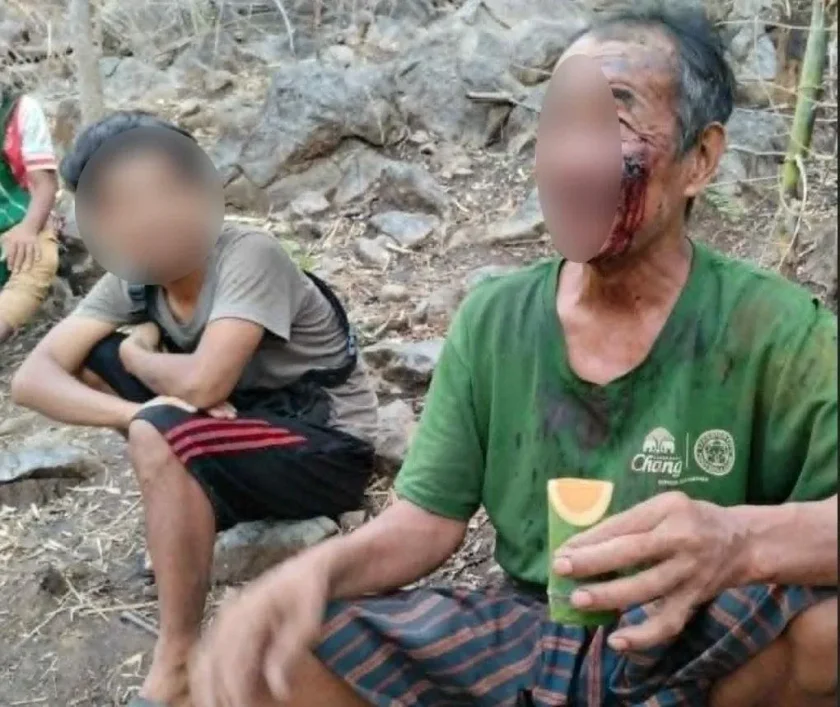
A displaced person who escaped said that, in addition to burning homes, soldiers also arrested and beat people who were unable to flee in time.
“There were cases where soldiers beat people and left them by the roadside,” he said.
However, Kantarawaddy Times has not yet been able to independently verify the number of people who were arrested or beaten by the military.
Residents and displaced people are concerned about their safety as military operations in Hpruso Township have become more frequent in recent days.
The displaced people are currently having to relocate again to other areas. While they have received assistance with temporary shelters, they are still in need of food supplies.
“With relief efforts underway today, it is somewhat safer now, but we still need support for our daily living needs,” said one displaced resident.
The IDP camp that was burned and destroyed by the junta had 68 households and a population of over 300 people.
Junta Fires Artillery Shelling on Eastern Hpruso, Injuring A Man
May 9 – Hpruso Township
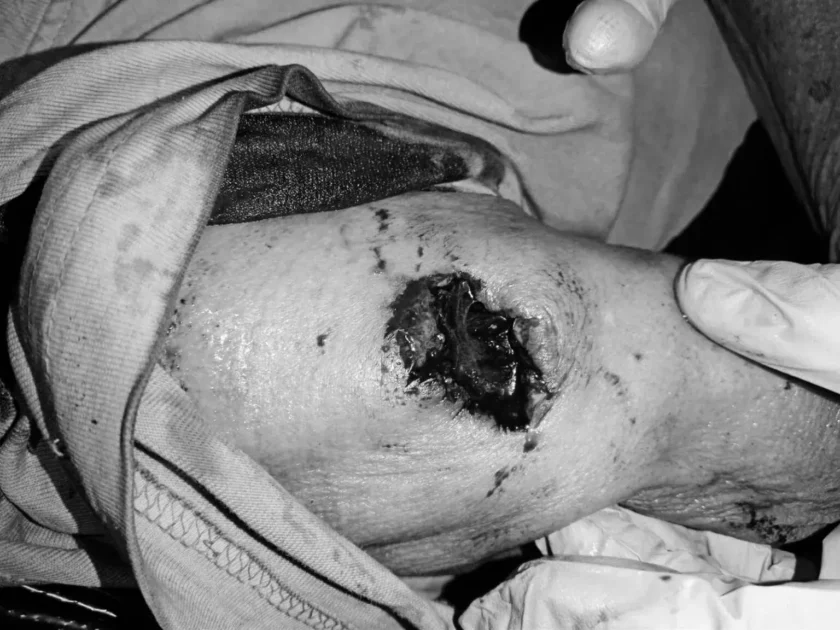
Artillery shells fired from the junta’s No. 14 Advanced Military Training School struck villages in eastern Hpruso Township, Karenni State, injuring a 90-year-old man.
The victim sustained injuries to his arm from shell fragments.
According to local sources, nine artillery rounds were fired toward villages on the evening of May 9, with six of them landing and exploding inside one village.
Residents said they are increasingly worried as military operations continue in Hpruso Township, accompanied by artillery attacks and drone strikes.
On May 7, a military column advancing toward eastern Hpruso arrested a villager who was on his way to his farm. As of May 10, he had not yet been released, according to local residents.
…………………
Farmer Escapes Four Days After Arrest by Military in Hpruso
May 11 – Hpruso Township
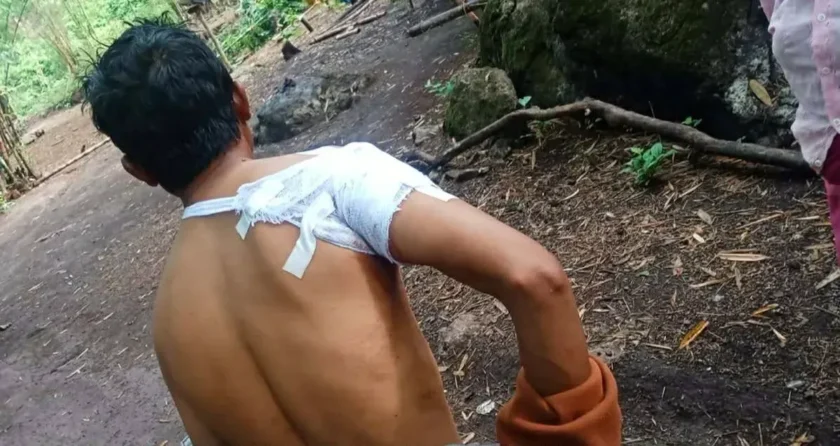
A 40-year-old man who had been arrested by the military junta escaped on May 11, four days after being detained.
The man is a local farmer from eastern Hpruso Township, Karenni State. He was arrested on May 7 while traveling to his farm.
According to his account, soldiers tied his hands behind his back, blindfolded him, and took him away after the arrest. He was also interrogated and beaten during the capture.
“He was beaten from the moment he was arrested. While being taken away, they made him change his clothes. At night, his hands were tied behind his back. In the morning, they tied his hands in front. His eyes were blindfolded for about two days and two nights,” said a close relative of the victim.
The man also sustained an injury to his right shoulder after soldiers opened fire while he was trying to escape.
Since early May, military operations have been ongoing in Hpruso Township. During these operations, local farmers have been arrested, IDP camps have been raided, and homes have been burned.
At present, more than 1,000 local residents, including displaced civilians who fled the attacks, are sheltering in other locations.
Urgent Need for Food and Shelter Assistance for Wheh Du Lar IDP Camp Residents Displaced by Military Offensive
———————————
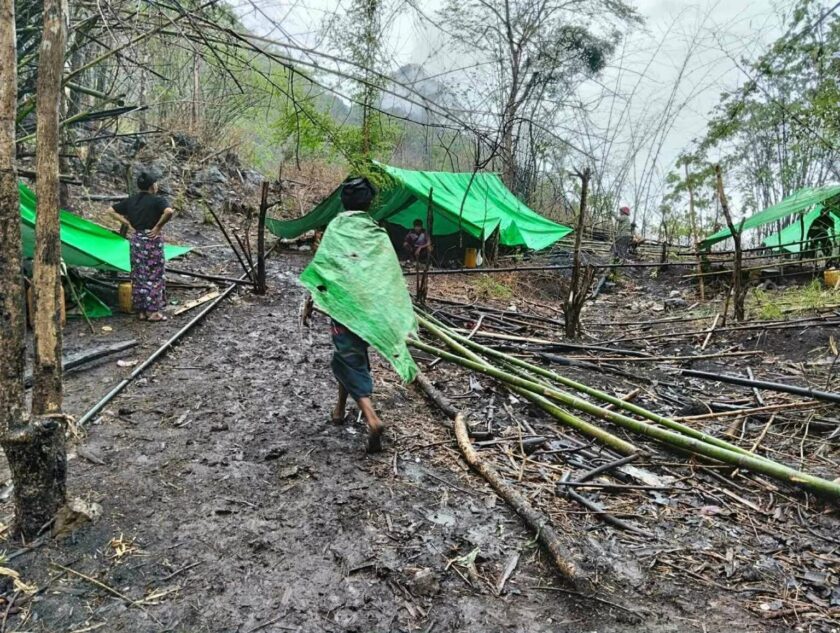
Conflict-displaced civilians are seen hiding in the mountains and forests.
May 8 – Hpruso Township
Internally displaced persons (IDPs) from Wheh Du Lar IDP Camp in Hpruso Township, Karenni State, are in urgent need of food and shelter after a junta column entered the camp on May 8, forcing residents to flee for their lives, according to displaced civilians.
As they fled, many were unable to take their vehicles, motorcycles, farm tractors, food supplies, or personal belongings with them. As a result, they are now facing urgent shortages of food and shelter. The military column raided the camp and set fire to shelters and household possessions.
Displaced residents currently have not yet found permanent places to stay. Some are temporarily sheltering with relatives and friends, while others are living collectively under makeshift tarpaulin shelters.
The displaced people also reported that they had to walk for half a day to reach safer locations. Some elderly individuals sustained injuries during the escape and are in need of medical care.
At Wheh Du Lar IDP camp, the majority are villagers from Preh Taw and Htar Leh villages, along with displaced people from Demoso and Hpruso townships. There are over 140 households and an estimated population of around 700 people.
Residents said that military activities have intensified along the Hpruso–Nan Phe road. In addition to ground operations, the military has been carrying out drone attacks and artillery shelling toward civilian-populated areas. As a result, people from other IDP camps and several villages have also been forced to relocate due to security concerns.
According to aid workers, more than 1,000 people have been displaced by ongoing military operations in Hpruso Township, and humanitarian assistance is urgently needed.
——————————————–
Civilian Injured by Suicide Drone and Artillery Attack in Hpasawng
May 21 – Hpasawng Township
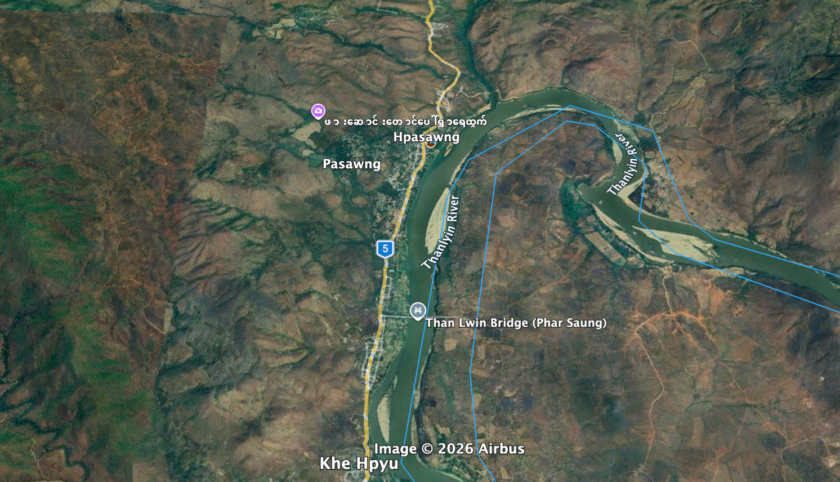
Around 11 a.m. on May 21, the military junta launched an attack using two kamikaze (suicide) drones and fired two rounds of 120 mm artillery at a location in Hpasawng Township, injuring a local resident.
The injured person is a car conductor who was hurt during the drone strike. He sustained one wound to his left arm and two injuries to the left side of his chest.
The injured person is in a serious condition and has been sent to the hospital for treatment.
Following the drone attack, artillery shelling also damaged a vehicle that was present at the scene.
————————————————–
Five People Died in Loikaw’s Belu Creek Within One Month Due to Various Causes
Kantarawaddy Times
According to records accessible to Kantarawaddy Times, five people died in Belu Creek in Loikaw Township, Karenni State, during May. The deaths were caused by various reasons, including drowning.
The five deceased included four men and one woman. The deaths occurred on May 7, May 10, and May 13.
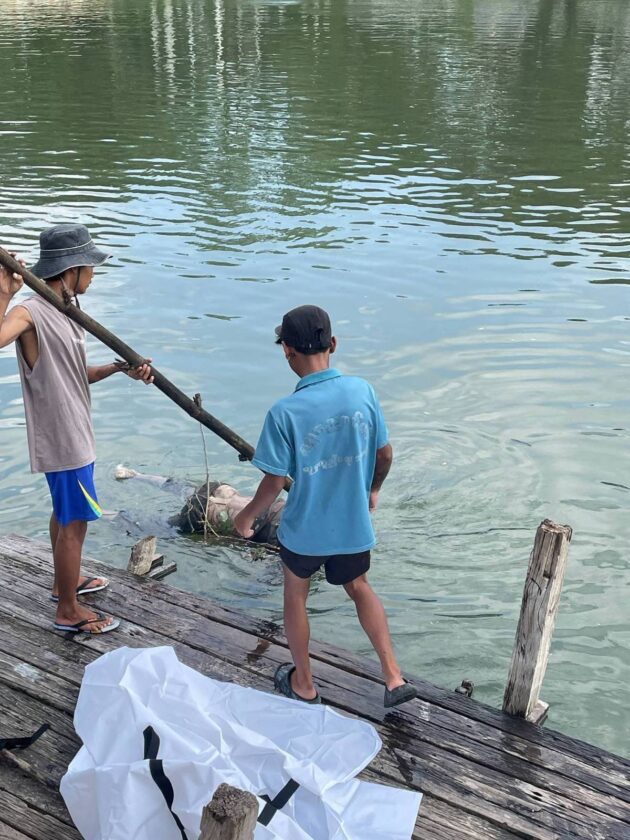
According to information posted on the social media page of the Shwe Nyaung Pin Social Assistance Association, in previous months the association had also recovered and buried a body that was only partially intact after it was found in Belu Creek.
Regarding the frequent discovery of bodies, a local resident said:
“Because the circumstances surrounding some deaths are unknown, people think about many possibilities. For example, some bodies that were found after death do not seem like ordinary drowning cases. There was a body with a severed head. When such bodies are found in the water, people wonder whether drowning alone could explain those cases.”
The two people who died on May 7 and May 13 were both men. In both cases, only their bodies were found, and the circumstances of their deaths remain unknown.
The remaining three deaths occurred on May 10. All three victims were cousins who drowned while bathing in the creek.