




Kantarawaddy Times
For parents living in displacement, the question is no longer, “What should we cook today?” Instead, it has become, “How can we make sure our children have enough to eat today?”
Parents want to provide their children with nutritious meals, but in reality, many struggle just to secure enough food for a single day. In situations where they cannot always afford even basic essentials such as cooking oil, salt, and chili, displaced families in Karenni are increasingly worried about their children’s nutrition.
“Of course I want to feed them nutritious food, but I just can’t. We can only afford to buy meat two or three times a year,” said 32-year-old Daw Sue Myar, describing her inability to provide adequate nutrition for her two young sons.
Although there is no rule that women alone should be responsible for cooking in a household, in practice that burden falls primarily on women like Daw Sue Myar. Thus, every day, many mothers are left worrying about what they have to cook tomorrow and how they will feed their children.
After the military coup, Daw Sue Myar’s family was forced to flee their home and has already relocated three times. Originally from Yayphyu village in southern Shan State, she now lives with her husband and their two sons, aged 13 and 9.
Among the many hardships of displacement, her greatest concern is whether her children are receiving proper nutrition. Yet under current circumstances, rather than ensuring children receive all the necessary nutrients, she has to prioritize that they have enough to eat each day.
Like Daw Sue Myar’s family, many other displaced families in the camp face similar challenges. They are also experiencing continuously rising food prices and shortages of essential goods caused by transportation difficulties.
As a result, many families survive by gathering seasonal vegetables from the wild and eating whatever fruits and crops they manage to grow on a small scale.
“There’s nothing we can do. We just have to live like that,” Daw Sue Myar said, describing the realities of displacement.
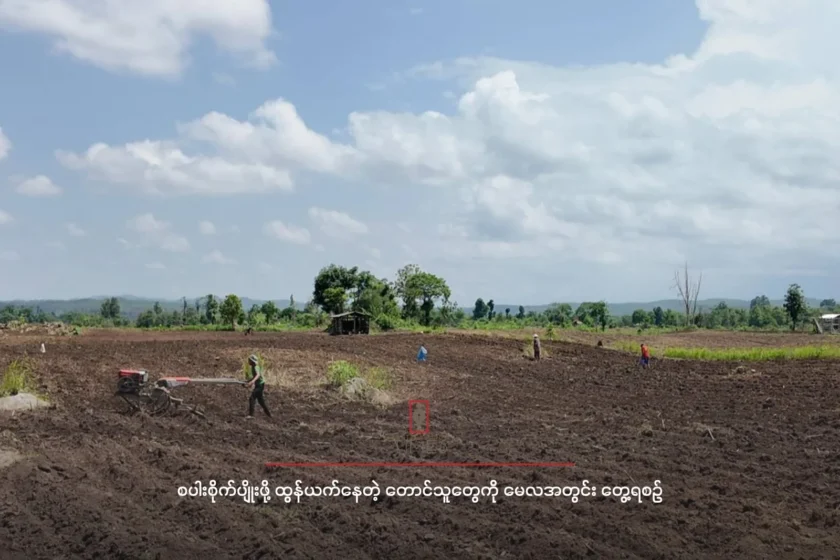
Her daily routine begins with preparing breakfast and dinner, and then heading to a hill farm with her husband. They rent the land from a local family, and whatever crops they harvest provide their family’s main source of income and food.
Even so, the yields from the farm are not enough to fully support the family’s needs, so she cannot provide adequate nutrition for her two sons. For now, filling their stomachs matters more than receiving proper nutrition.
“When we lived in our village, even if we couldn’t eat what we wanted every day, at least we could once a week. We could also buy snacks and fried foods for the children. Now that we’re displaced, we cannot even afford snacks. Even when we can, all I can say is, ‘Just take 1,000 kyats worth,’” she said.
Whenever she cannot meet her children’s needs, Daw Sue Myar feels sad. There have been times when she borrowed 1,000, 2,000, or even 5,000 kyats from neighbors just to buy snacks for her sons.
“I just want my children to be happy. As long as we have enough food and can make a living, that is enough for me,” she said, expressing her simple wish.
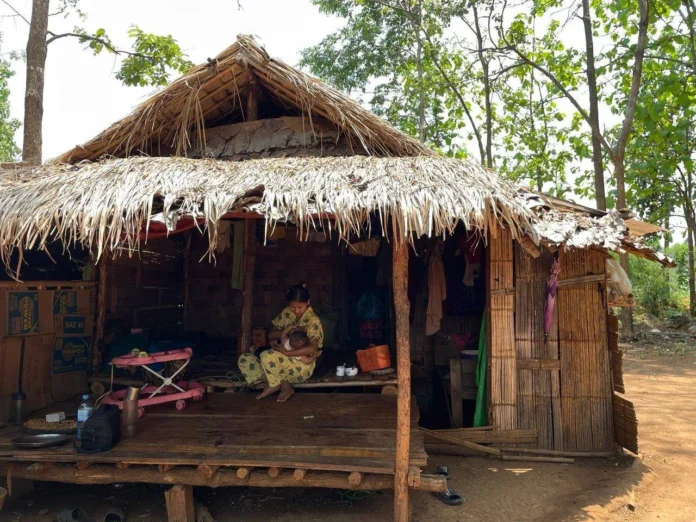
Like Daw Sue Myar, 23-year-old Maw Phray Myar has spent the past five years living in displacement. She has an eight-month-old baby, her first child, and hopes only that the infant will grow up healthy and well-nourished.
Her baby is still breastfeeding while also beginning supplementary foods, making adequate nutrition essential. At the same time, Maw Phray Myar herself needs nutritious food in order to continue breastfeeding.
However, in a life where even meeting basic daily needs is difficult, ensuring proper nutrition for both mother and child has become a major challenge. She says her priority is simply helping her baby grow up healthy.
“When it comes to my child, health is the most important thing. The biggest challenge is money,” she said.
In Karenni State, where nearly 200,000 people remain displaced, not every child has access to a nutritious diet.
“Some children eat only whatever seasonal food is available. During jackfruit season, they eat jackfruit every day. During bean season, they eat beans. When bamboo shoots are in season, they eat bamboo shoots,” said a teacher at a displacement school.
Because she works with children every day, the teacher closely observes their eating habits and nutritional conditions. She is also the mother of two children herself.
She said that because many children cannot eat a balanced diet, some have begun showing signs of malnutrition.
“There are some children with mild malnutrition. But I haven’t seen cases of severe malnutrition,” she said.
As someone who sees the daily lives of children in the displacement camp, she feels sad not only for her own children but also for the other children, as a fellow mother.
As displacement drags on, it has become increasingly difficult for families to meet their children’s nutritional needs. While food prices continue to rise, household incomes have failed to keep pace, making nutritious foods even less affordable.
Dr. Ye Zaw, a Civil Disobedience Movement (CDM) doctor providing healthcare in Karenni State, said that both children and older adults are now suffering from the effects of malnutrition. He believes the changes in diet and living conditions caused by prolonged displacement are having long-term consequences for people’s health.
“People just have to live as they can. Since the coup, many have been living in forests and mountains, eating whatever they can find. That leads to poor nutrition and weakened immune systems. That is the main reason why diseases can enter the body much more easily. If your immune system is strong, you can resist many infections. But when it’s weakened, you are likely to be sick easily,” Dr. Ye Zaw explained.
According to UNICEF’s 2026 Humanitarian Action for Children report, an estimated 410,000 children under the age of five, along with pregnant and breastfeeding women in Myanmar, are at risk of acute malnutrition.
Behind those statistics are families who can afford meat only a few times a year and others who survive day by day by gathering seasonal foods from the wild.
More than five years of armed conflict, amid continuing economic hardship and displacement, ensuring that children receive adequate nutrition remains an ongoing challenge, not only for Daw Su Mya’s family, but for displaced families across Karenni State.