




Kantarawaddy Times
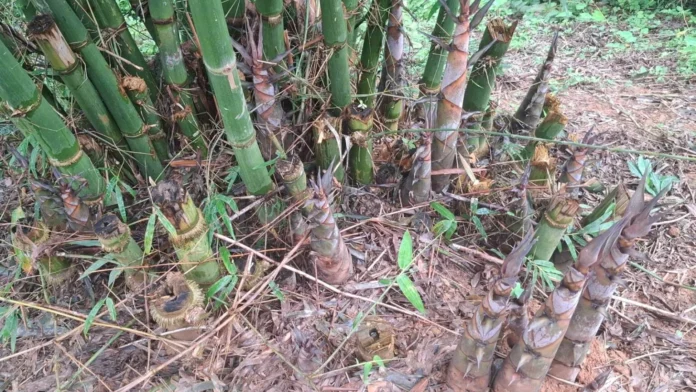
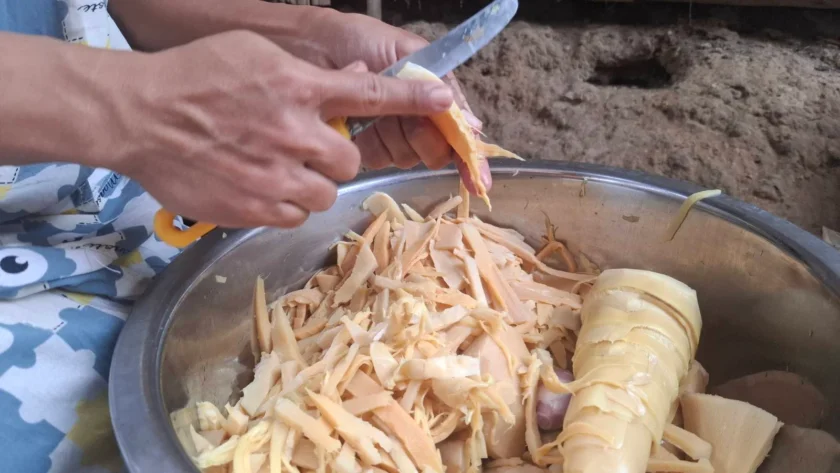
With the arrival of the rainy season, bamboo shoots are now sprouting across Karenni State. For displaced people sheltering in forests and mountainous areas, these fresh bamboo shoots can be turned into a very good dish.
As displacement drags on and many families remain without stable incomes, internally displaced people (IDPs) increasingly depend on seasonal wild foods from nature to survive. Bamboo shoots are among the most important of these natural food sources.
“During bamboo shoot season like this, for displaced people and local communities living in eastern Demoso Township, being able to have a meal of bamboo shoots significantly reduces our expenses,” said U Shay Reh, a displaced man currently living in eastern Demoso Township.
Bamboo shoots not only serve as food for families but also provide a small source of income, as people can harvest and sell them.
However, as more people harvest bamboo shoots both for consumption and for sale, a new challenge has emerged for displaced communities.
When too many shoots are picked, fewer are left to grow into mature bamboo. Since most displaced families are living deep in the forests, they rely almost entirely on bamboo to build their temporary shelters. Now, bamboo has become scarce for construction.
At the same time, preserving bamboo has become essential for families hoping to build and maintain warm, secure homes.
If every new bamboo shoot is harvested for food, there will be fewer mature bamboo plants available in the future.
“Almost all shelters for displaced people are built from bamboo. Since we’ll always need bamboo, people must refrain from harvesting every bamboo shoot. Bamboo needs to be preserved as well,” said an administrative official from eastern Demoso Township.
The need to protect bamboo, especially in areas near villages, is becoming more urgent.
As displacement continues to drag on, with more people arriving and shelters needing annual repair, it makes it increasingly important to conserve natural resources such as bamboo and timber.
In eastern Demoso Township, Karenni State, where tens of thousands of displaced people are sheltering, nearly all homes in displacement camps are constructed from bamboo.
Because the shelters are made of bamboo, they are vulnerable to insect damage and deteriorate quickly under constant exposure to rain, wind, and intense sunlight.
In some shelters, bamboo-boring insects produce fine dust that falls inside the homes, raising concerns about respiratory illnesses among residents.
For these reasons, many shelters have to be repaired or rebuilt almost every year.
Although local administrators have previously urged people to protect bamboo, there have been no official written regulations or penalties for those who continue harvesting bamboo shoots, according to Khu Htwe Reh, another displaced resident.
“Bamboo can be used in many things. Especially in times like these, it’s very valuable. Timber has become scarce. The number of displaced people keeps increasing, and bamboo is the only material we can use to build homes. People have long been told not to harvest bamboo shoots near the camps. But I’ve never seen any official notice or fines to enforce the rule,” he said.
The situation facing displaced people in eastern Demoso Township reflects a difficult balance. They depend on nature to meet their immediate food needs, but excessive reliance on natural resources threatens the very materials they need to build and maintain shelter.
Amid rising prices, blocked trade routes, and worsening economic hardship, displaced communities will continue to rely on nature’s resources to survive. At the same time, creating alternative livelihood opportunities for displaced people remains an urgent and essential need.