




Download PDF File – Monthly Summary of Key Events in Karenni (Oct)
Military Junta Increasingly Used Suicide Drones In Attacks on Civilians
The military junta has increasingly used suicide drones in targeted attacks against civilians, according to records compiled by Kantarawaddy Times.
In October, there were at least 12 attacks targeting civilians, and five civilians were killed while 20 others were injured.
Among these attacks, six involved drone attacks, five of which were carried out using suicide drones. Meanwhile, there were at least six aerial bombing attacks.
Most of the targeted locations were villages where civilians were living, internally displaced persons (IDP) camps, and schools. Civilians working in agricultural farms were also targeted.
In September, there were 16 attacks targeting civilians, including eight drone attacks, six aerial bombing attacks, and two artillery shelling attacks.
Summary of Attacks in October
October 31– At around 2 p.m. on October 31, with no ground fighting occurring, the military junta launched an aerial bombing attack on an IDP school in eastern Loikaw Township, Karenni State. The attack killed three students, including two girls and one boy, on the spot and also injured five others. According to local residents, the junta used a Y-12 aircraft and a jet fighter to drop more than 20 bombs.
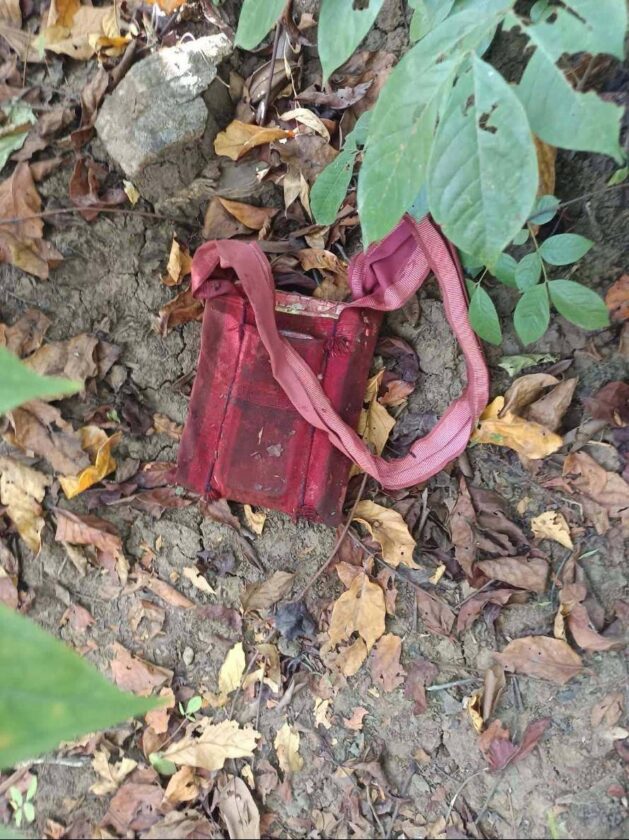
October 25 – The junta used suicide drones to attack three locations in western Demoso Township, Karenni State. According to local residents, four suicide drones were deployed in the attacks. During the attack, a newborn baby was injured.
October 24 – On the morning of October 24, the junta attacked a village in western Demoso Township, Karenni State, using a suicide drone. According to local residents, the drone flew in from the direction of Loikaw Township. There was no damage or casualties in the attack.
October 23 – The junta launched an airstrike on an IDP camp in eastern Loikaw Township, Karenni State, and three civilians were injured in the attack. Two airstrikes were carried out shortly after midnight on October 23.
The injured civilians included a 26-year-old man, a 44-year-old woman, and a 21-year-old woman. In addition, one house, some cash, and a motorcycle were also damaged or destroyed.
October 18 – At around 3 p.m. on October 18, the junta carried out a drone bombing attack on a village in eastern Hpruso Township (Kaylyar Township), Karenni State, according to local residents. During the attack, four bombs were dropped and exploded, which destroyed two houses.
October 13 – At around 11 p.m. on October 13, the junta launched an aerial attack on a location in western Moebye on the Shan-Karenni border. There were no casualties reported.
October 8 – Around 2 p.m. on October 8, the military junta carried out an aerial attack on a location in western Moebye, along the Shan-Karenni border, immediately killing two civilians on the spot. Two airstrikes were carried out, killing two displaced men aged 65 and 21. At least 10 other people were also injured in the attacks.
October 5 – Around 10 p.m. on October 5, the junta attacked an area near civilian residences in eastern Demoso Township by using two suicide drones to drop bombs. There were no casualties reported.
October 4 – According to local residents, on October 4, the junta carried out two aerial bombing attacks on western Demoso Township, Karenni State. One attack took place at around 1 p.m., while another occurred at 3 p.m. During the attack, in addition to dropping 100-pound bombs, Point 8 machine guns were also fired. The attack damaged several buildings and two vehicles.
October 3 – At around 4 p.m. on October 3, a man was injured in a suicide drone attack by the military junta while returning from checking his rice field in Nanmekhon Township on the Shan-Karenni border. The injured person was a 24-year-old man, and he suffered serious injuries to his arm after being struck by shrapnel.
Similarly, at around 2 p.m. on the same day, the military also carried out a drone bombing attack targeting farmers who were harvesting rice in their fields.
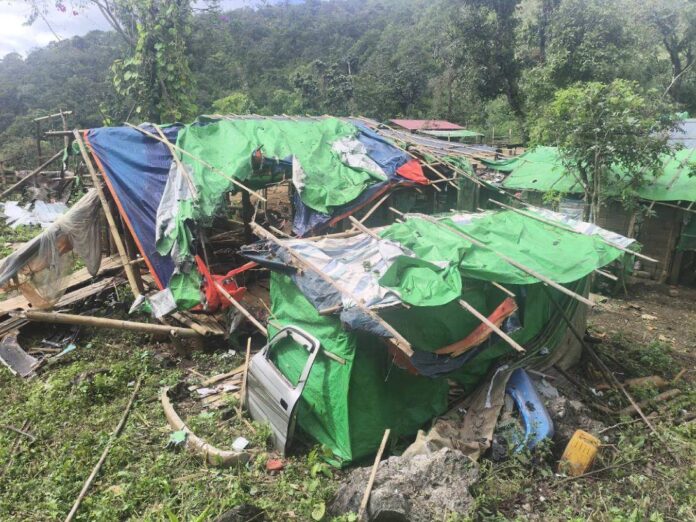
October 2 – The junta attacked western Hpruso Township, Karenni State, using two suicide drones with three bombing attacks. Although no casualties were reported, several makeshift shelters were damaged.
October 1 – The military junta carried out an airstrike with four bombs on western Hpruso Township, Karenni State. According to local residents, there were civilian injuries in the attack, but Katarawaddy Times could not independently confirm this information.
Summary of Military Situation
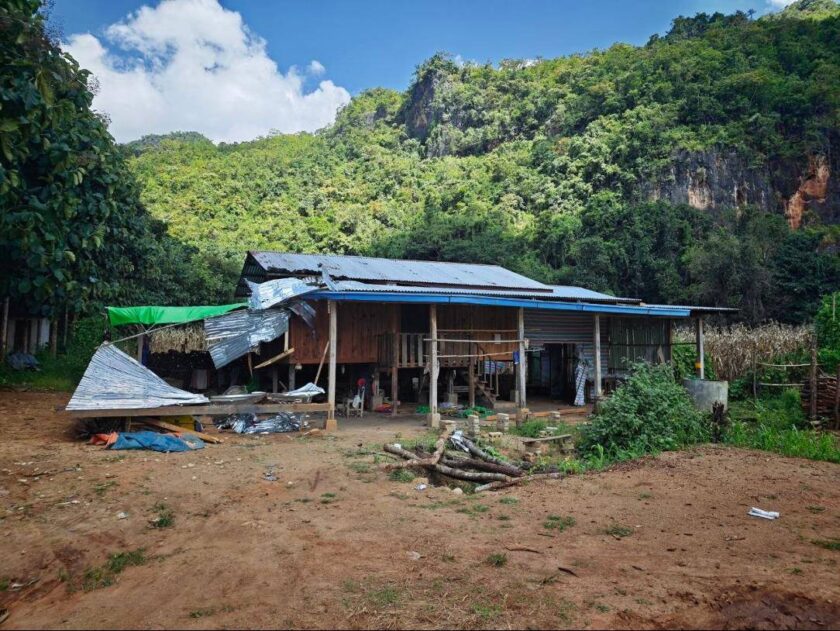
Fighting between revolutionary forces and the military junta in the western part of Moebye, along the Shan-Karenni border, has been intense since early October, and the junta used airstrikes and drones in the attack, according to the Moebye People’s Defence Force (PDF).
On October 7, fighting between the two sides intensified, and the junta troops suffered heavy casualties. Following this incident, the military launched artillery, drone, and airstrikes on October 8, not only targeting fighting areas but also locations where civilians were present.
The attacks destroyed many civilian homes, and some houses were also burned down.
As fighting may continue inside Moebye town and the military junta may continue conducting airstrikes, the Moebye People’s Defence Force has urged residents to be careful and not to travel through areas restricted by revolutionary forces. Revolutionary forces have not yet released detailed statements about casualties on both sides and the situation of the fighting in Moebye during October.
More Than 600 Local Residents and Displaced People Forced to Flee Again in Moebye
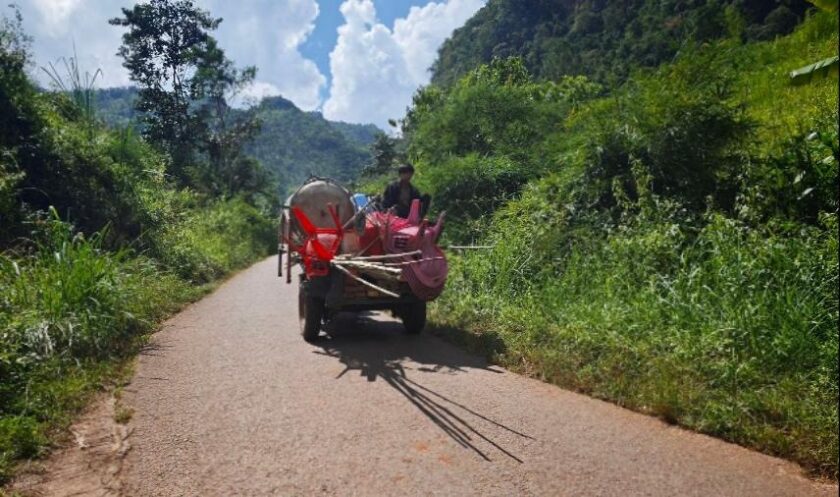
Due to the military junta’s airstrikes, drone attacks, and artillery shelling in western Moebye Town, local residents and internally displaced persons (IDPs) have been forced to flee again since the second week of October. Displaced people estimate that more than 600 people have been displaced during October. Some of those who fled had to leave their cultivated rice fields behind.
Clashes between revolutionary forces and the junta troops broke out in western Moebye on October 7. The junta’s artillery shelling, drone attacks, and airstrikes destroyed numerous homes and killed two displaced civilians. As the situation in the area is not stable yet, those who fled have not yet been able to return to their homes.
Military Junta Forces Residents Returning to Moebye to Take Turns Guarding the Town, Assigning One Gun to Every Three Men
In Moebye Town, along the Shan-Karenni border, the junta has been providing guns to people who have returned to live there, one gun per group of three men, and making them take turns standing guard. Men aged around 30 to 40 who are physically capable of carrying guns have been selected and assigned guard duties at various locations throughout the town.
Following intense fighting in Moebye, many local residents were forced to flee. Since March 2026, some residents have gradually returned to live in the town.
The military junta has begun assigning guard duties to those who have returned. According to reports, as the military junta fears they might take guns and run away while on guard duty, they only select men who have families and threaten them to perform these duties.
Furthermore, residents who have returned to Moebye are not allowed to live freely in their own homes. Instead, they are required to stay together in monasteries. When they need to go outside the town to purchase supplies, the military transports them by vehicle to Pekhon Town. After shopping, they must return to designated meeting points. The junta restricts their movement and prohibits residents from leaving the town. Civilians were only allowed to travel to designated locations.
Martial Law Extended for Another 90 Days in Three Townships in Karenni State
The military junta has announced another 90-day extension of martial law in 55 townships across Myanmar, including Shardaw, Hpasawng, and Mese townships in Karenni State, which will take effect starting from October 18. Martial law was extended in three townships where the military has not been able to establish military operational control and troop strength. In Shardaw, Hpasawng, and Mese townships, which remain under martial law, revolutionary forces are in control, and the administrative mechanism is operating. On the other hand, there are frequent airstrikes and suicide drone attacks targeting civilian areas, according to local residents.
Draft Military Law for Karenni Joint Forces Approved and Enacted
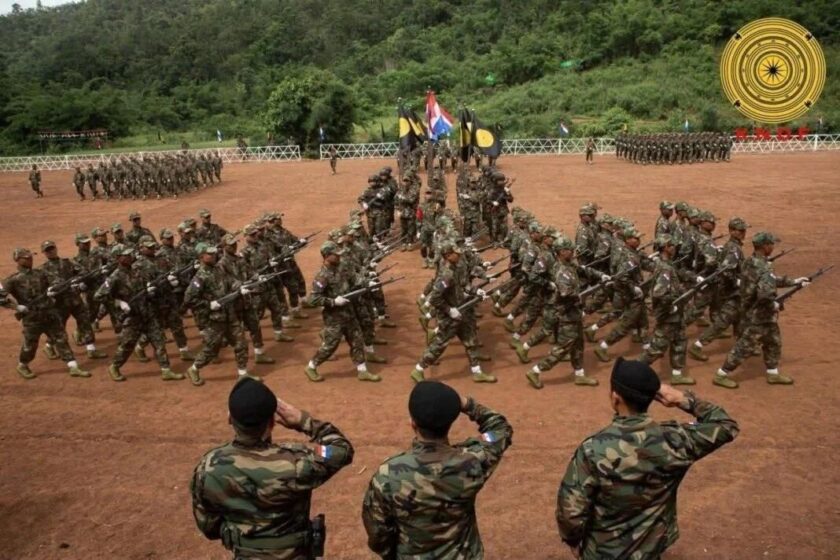
The Karenni State Interim Parliament (KSIP) announced that it had approved and enacted the draft military law for the Karenni Joint Forces as legislation during its 11th session held on October 16. The law is intended to be followed and implemented by all revolutionary forces operating in Karenni State. The legislation was drafted and submitted by the Karenni State Interim Executive Council (IEC), with the aim of establishing the United Karenni State Army (UKSA) as a unified state military force in the future.
It also aims to strengthen command and obedience, as well as compliance with rules and regulations among revolutionary forces operating within the state. Furthermore, the law aims to establish a well-organized military force capable of defending the Union through the formation of a state-level army. The draft military law for the Karenni Joint Forces was developed following more than a year of discussions involving armed groups operating within the state, relevant government bodies, women’s organizations, and other stakeholders.