




Kantarawaddy Times
“In our new education system, we set the standard of 30 students per classroom. If there are more than 30 students, we are supposed to divide them into two classes. However, depending on the number of teachers and students at each school, we have to keep more than 40 students in one classroom, and even more than 50 students in a single class.”
This is how Daw Amara Boe, a school administrator from Somo Prehsoeleh (Shardaw) Township in Karenni State, described the current challenges that schools in Karenni State are facing.
Although the education system stipulates that only 30 students should be placed in a classroom to improve learning effectiveness, the numerous challenges that have emerged since the military coup have made it impossible to maintain this standard.
Daw Amara Boe is a Civil Disobedience Movement (CDM) principal at a high school in Somo Prehsoeleh (Shardaw) Township and also serves as the township education board coordinator.
Despite her role as a school principal, she still has to teach several subjects because there are not enough teachers at her school.
“Although I am the school principal, due to the shortage of teachers, I also have to help with teaching. If other teachers are responsible for three subjects, I also teach three subjects. That’s the only way we can dedicate our full time to the students,” she said.
There are approximately 24 schools operating in Somo Prehsoeleh (Shardaw) Township. Despite the widespread difficulties following the military coup, around 1,700 students continue pursuing their education.
More than 160 teachers are currently teaching in these schools. Most of them are volunteer teachers who have sacrificed their own interests to serve their state, their ethnic community, and their students.
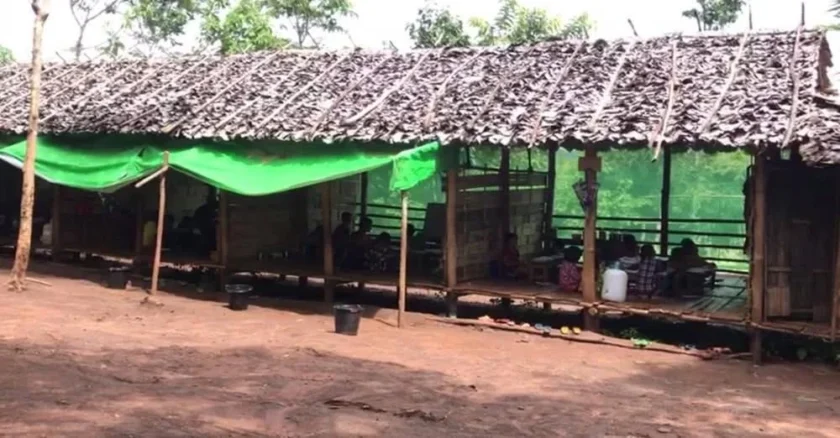
“Some schools don’t have any CDM teachers at all. Right now, there are three schools without a single CDM teacher. At our school, we have four CDM teachers, while the rest are volunteers. Overall, around 30 percent are CDM teachers and 70 percent are volunteers,” Daw Amara Boe explained.
However, as the revolution has continued over the years, volunteer teachers have faced increasing livelihood challenges. Because financial support remains limited, the number of volunteer teachers declines at the end of every academic year, Daw Amara Boe explained.
Schools across Karenni State rely on cooperation between CDM teachers and volunteers to continue providing education. However, many teachers, especially volunteers, have been forced to leave education due to family financial hardships and seek other jobs to support themselves.
“Every school needs more teachers because more schools have reopened. Another issue is that, during this period, schools have reopened with a small number of CDM teachers and a large number of volunteers. Many volunteers did not originally come from the education background. As a result, they often have to prioritize earning a living. When the small stipend they receive isn’t enough to support themselves or their families, they are forced to leave and find other work.”
Not only volunteer teachers but also CDM teachers are facing similar hardships. Nevertheless, Daw Amara Boe believes that maintaining the education sector is essential to developing the human resources needed for Karenni’s future.
With every academic year that passes, the shortage of teachers and the challenges facing educators continue to grow. She emphasized that sustainable, long-term teaching staff are essential for nurturing future generations and developing the skilled human resources the state will need.
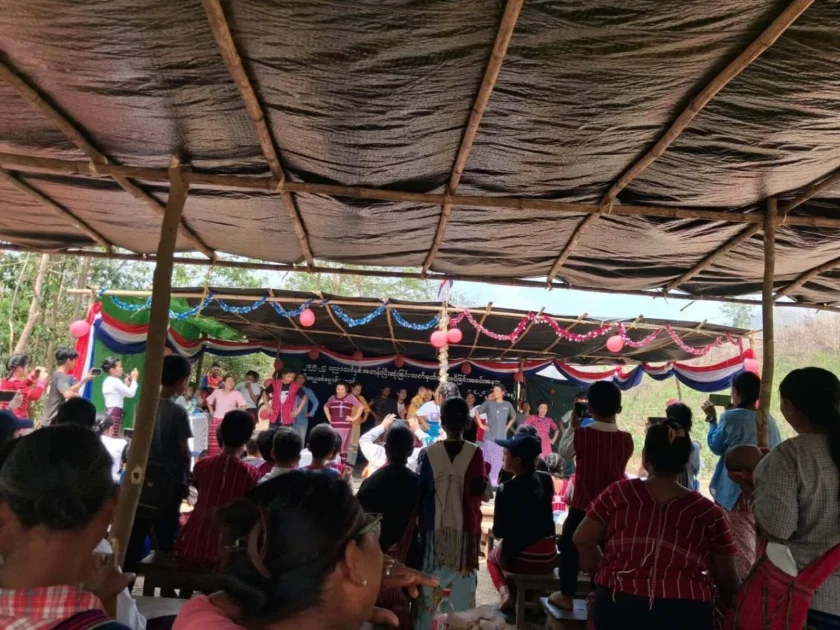
“Our township has faced a teacher shortage since schools reopened in 2022. We don’t have many CDM teachers here. Mostly, they’re local volunteers from nearby villages. Many of them are young people. Some volunteer for one or two years, while others have now served for four or even five years. But many eventually leave because of family difficulties or concerns about their future. Some also leave to work abroad. As a result, the shortage of teachers has become increasingly serious,” a young person involved in supporting the education sector shared his concerns
Daw Amara Boe stressed that the resilience of teachers alone is not enough to sustain the education system. She called on all sectors of society to provide greater support for education.
“Everyone needs to pay more attention to education. For this country to develop, we must begin with education. Twenty or thirty years from now, the human resources we need will come from the students we educate today. Unfortunately, many people no longer prioritize education or show much interest when it is discussed. That’s why everyone needs to work together to strengthen education. Teachers’ basic salaries and living allowances also need to be increased.”