




Kantarawaddy Times
“It feels like hell. This is my first time working in a foreign country. My first job was at a grocery store, so I had to wake up early in the morning, eat late, finish work late at night, and go to bed late. Looking back, even now, it still feels like hell.”
These are the words of Sara (pseudonym), a Karenni young woman in her mid-20s. Sara used to live in a neighborhood in Demoso Township.
Before the military coup, Sara was an employee at a government department. Nine days after the coup, she joined the Civil Disobedience Movement (CDM). After that, she attended military training to resist the military regime and supported the revolution by carrying out her assigned responsibilities.
After being involved in the revolution for around two years, she had to leave due to family and livelihood concerns.
Currently, Sara is working somewhere in Thailand. The happiest moment for her is when she can send her earnings back to her family. Even before the coup, she regularly supported her family financially. Now, despite struggling in a foreign country, she is even more determined to work harder for them. Her family members are internally displaced due to the conflict, which mainly motivates her to keep going.
“Did someone push me to go abroad? Not really. I chose to leave because I could somehow foresee the future. I could see the situation in Myanmar, so I decided to leave on my own,” said Anna (pseudonym), another 25-year-old.
Although Anna smiled when saying this, it was a lifeless smile. Young people like Anna and Sara had no real choice but to take up such work, or rather, they had no choice at all. This lack of choice began on February 1, 2021, when the military coup started. Now, it has been over five years.
Anna is also currently working somewhere in Thailand. Before the coup, she worked in an air-conditioned office using a computer while pursuing her education. But after arriving in a foreign country, she had to start her life anew as a dishwasher in a restaurant.
“My first job here was washing dishes, so sometimes I miss my previous job. Even now, I still feel sad and upset about it,” Anna said.
It was not easy for Anna to come to Thailand. Although she entered legally with a passport, she faced strict interrogation at the airport by military authorities because she held an ID card from Kayah (Karenni) State. Fortunately, she managed to pass through.
Anna is originally from a neighborhood in Loikaw, Karenni State. Today, like her, many young people in Karenni are leaving beacause it is not only searching for a better future, but also are forced to support their families.
Since 2021, amid ongoing conflict, schools have been closed, and businesses shut down, causing young people to lose job opportunities. As their futures disappeared at home, going abroad became the only option.
Unlike Anna, Sara did not cross the border legally.
“I was scared when crossing the border. I kept thinking that I might never be able to return. I wondered if I would ever come back, or if I would have to go very far away. I kept thinking, will I ever return to my state someday? I was afraid. Another fear was whether our car would be stopped and we would be arrested,” Sara recalled.
For Karenni youth, the journey to overseas workplaces has not been easy. Those who travel through illegal routes face great uncertainty and constant fear of inspections and arrests by related authorities.
Once they arrive, some manage to obtain legal documents and work properly, while others, unable to afford the costs, continue working without legal status.
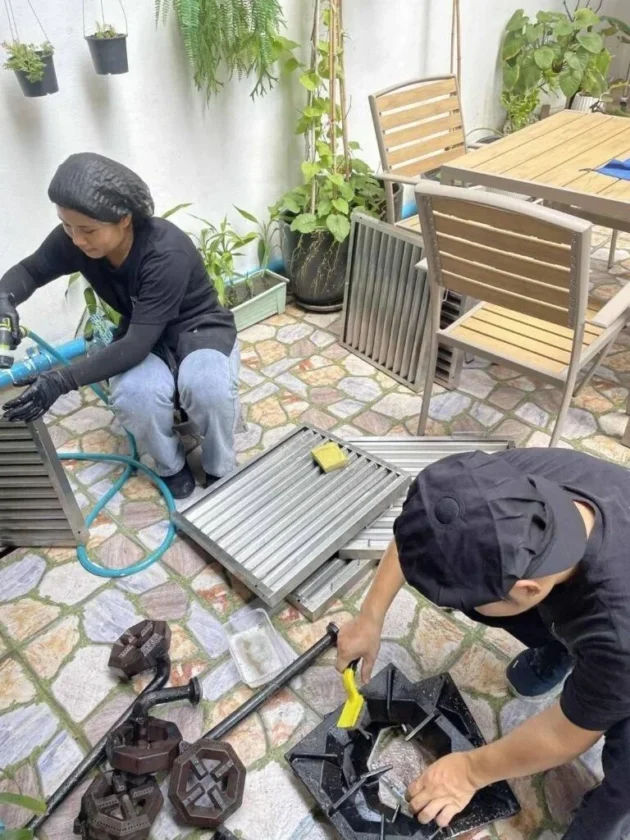
In the five years since the coup, many young people from Karenni State have entered the workforce in Thailand, where working in factories, workshops, construction sites, and restaurants.
In Thailand, their lives begin and end each day with the sound of machines. Some work between 10 and 12 hours a day. While their wages are enough to send back to the families left behind, it is still not enough to rebuild their own dreams.
“If I didn’t come here to work, I don’t know what I would be right now. One certain thing is that if I had stayed in the country, I wouldn’t be able to support my family,” said Khu Reh.
Khu Reh is someone who spent four years fighting against the military dictatorship as a member of a revolutionary armed group. Now, he works in a factory in Thailand. He is originally from a neighborhood in Loikaw and, before the coup, he was a salaried employee in a government department.
Due to job scarcity in the country, his income had been a crucial support for his family.
“When I work here now, if you ask whether I think back to my life as a soldier. Yes, I do. The people I lived with, moved with, fought alongside, including my friends and my teachers, I miss them all. I miss everything. But at the same time, I feel sad that I had to leave because of the situation,” Khu Reh said.
As displacement drags on, life becomes increasingly difficult, and the needs of families continue to grow day by day. It would not be wrong to say that for many young people abroad, it is not a personal choice but a family necessity that has driven them into overseas labor.
Most of these young people send the majority of their earnings back home. That money becomes a lifeline that supports daily household needs, medical expenses, and the education of their siblings.
Although their backgrounds differ, these young migrants share similar fears, needs, and reasons for leaving.
After the 2021 military coup, options for young people across Myanmar, including Karenni State, became very limited. Some chose the path of armed revolution out of responsibility for their country, while others took on the responsibility of supporting their families.
With war blocking access to jobs and education, some young people crossed the border into Thailand to work, while others remained involved in the revolution. Despite their paths differing, in which some fight for the country, others work for their families, they share the same underlying hope. This is to succeed the revolution as soon as possible. For this reason, it is important that youth abroad continue to support the revolution.
At a time when many were forced to take up armed resistance and build a new system, the fact that so many young people are leaving the country does have an impact on the revolution. This was stated by Khu Reedu, Chief of Staff of the Karenni Nationalities Defense Force (KNDF), during the closing ceremony and lucky draw event of the “Yadanar Arman” campaign held on February 15. He also urged people to continue contributing from wherever they are to ensure the success of the revolution.
For Karenni youth who fled war zones, overseas workplaces are not merely places to earn a living. They are also part of a continuing journey to search for a future. Having escaped conflict, their steps forward, by supporting their families and searching for a future, must continue.
“I came abroad because I lost my way. Even if you call this a journey to find my dreams again, I would say I’m still searching. I haven’t found anything yet. I still don’t know what I want to do or what job I want. Even now, I feel lost. Just like the past five years, I’m still frustrated, still depressed, still searching,” Sara said.