




Kantarawaddy Times
According to laboratory analyses conducted by Chiang Mai University in Thailand, tributaries of the Salween River flowing through Karenni State contain toxic arsenic (Arsenic – As) at levels 4 to 55 times higher than the safety standards.
A press conference regarding the issue was held on February 10 at Chiang Mai University in Chiang Mai, Thailand. During the press conference, Banyar Khun Aung (Saya Banyar), spokesperson of the Karenni Interim Executive Council (IEC), Assistant Professor Dr. Wan Wiriya from the Faculty of Science at Chiang Mai University, and Assistant Professor Dr. Surachanee Sriyai, co-founder of S&I Strategic Advisory, presented the findings of the collaborative water quality testing conducted in the Salween River.
Dr. Wan stated that field teams collected water and plant samples along the Salween River in December 2025. The IEC also participated in the field investigation, which confirmed the presence of arsenic.
“One thing is that these toxins come from mining operations. So, we cannot think only in terms of our single state. We have been testing the Salween water all along, from the Shan-Karenni border all the way to the Karen, Karenni, and Thai borders. Every single water sample we have tested so far has shown results containing this arsenic,” said Banyar Khun Aung, IEC Secretary 2.
He further confirmed that mining operations are responsible for the river’s contamination. The Molo Creek, which flows from the Mawchi mining area into the Salween River, was also found to contain arsenic levels exceeding the standard limit.
“Molo Creek flows down from Mawchi. The arsenic level there is extremely high compared to normal. Therefore, we can clearly say that these toxins are entering the streams due to mining operations,” Banyar Khun Aung said.
So far, the IEC and Chiang Mai University have completed testing of water samples and plan to continue examining meat, fish, and plants.
“Our main concern is the meat and fish. We are more worried about the consumption pattern of fish from the river. Another thing we are looking at is plants. There are crops and vegetables grown for consumption. We need to go back and look at those aspects carefully. We also need to provide information on consumption methods and which practices might be safer. We plan to gradually provide education, notifications, and guidance on these matters later,” he further explained.
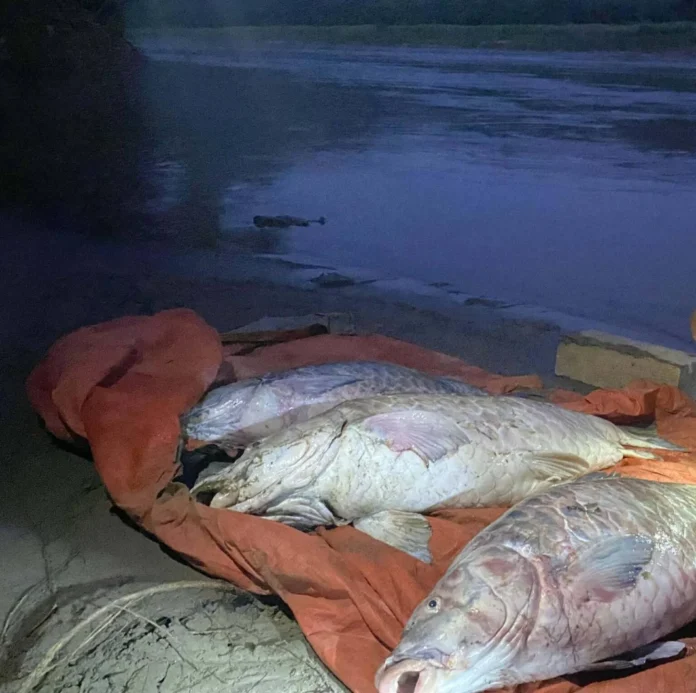
On October 28, 2025, a group of eight youths camping along the Salween River caught and ate fish, after which they experienced dizziness and vomiting. Seven of the eight show symptoms.
“One person only ate a small piece because he doesn’t like fish. He just felt a little dizzy, but otherwise was fine. The other 7 all ate it, and everyone vomited. We were even wondering if it was because of the fish. I don’t have any fish allergy. But this was my first time eating fish from the Salween. We wondered if it happened because the fish wasn’t clean, wasn’t fresh, or maybe it wasn’t cooked properly. We considered many possibilities,” the young woman said.
The Salween River flows through Hpasawng, Shardaw (Somo Prehsoeleh), and Bawlakhe (Ywarthit) townships in Karenni State. According to census data, Ywarthit in Bawlakhe township has a population of around 1,500 people, Hpasawng has over 5,000 residents, and Shardaw has more than 2,000.
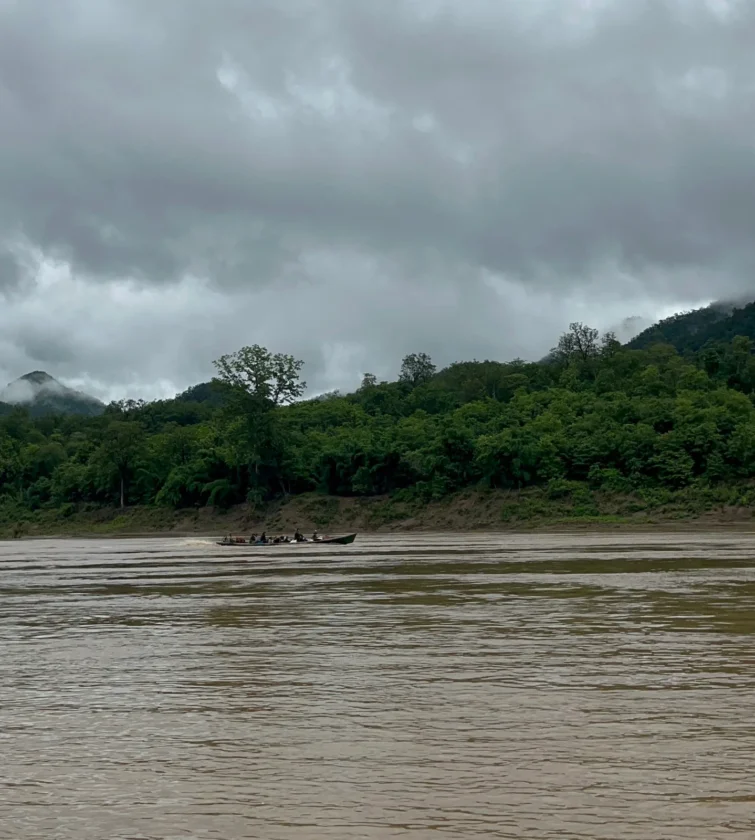
Many local residents living along the Salween River rely on it for their livelihoods, particularly fishing, hill farming, crop cultivation, and transportation. However, residents in Ywarthit who rely on the river said they were unaware of arsenic contamination and lacked knowledge about its health risks.
“If it weren’t safe to eat, people wouldn’t catch the fish. Everyone eats them regularly. It’s their regular diet. If the substance hasn’t permeated the fish, it would be edible, but if it has permeated them, they are in a very dangerous situation. For us, maybe because we have never been exposed to this substance before, our bodies are reacting. But if they have become accustomed to exposure, this situation would be really frightening,” a young woman commented, reflecting on the presence of arsenic.
Researchers also reported that sediments deposited along riverbanks during the 2024 floods contained higher concentrations of toxic residues compared to the typically sandy soil found there. According to locals, the riverbanks are normally sandy, but the clay silt appeared after the 2024 floods.
Dr. Wan noted that the origin of the clay sediments has not yet been confirmed. He expressed concern that future flooding could further spread toxic materials. He also pointed out that the contamination levels detected in the Salween River are similar to those recently found in the Sai River, a tributary of the Mekong in Mae Sai District, Chiang Rai Province, Thailand.
According to laboratory results from Chiang Mai University, arsenic concentrations in the Salween River and its mining-affected tributaries ranged from 0.042 mg/l to 0.553 mg/l, which is 4 to 55 times higher than safety standards.
The highest concentration, 0.553 mg/l, was found in water collected from an abandoned mine in Karenni State. In the upper Salween River in Phadang area, Mae Sariang Township, Mae Hong Son Province, near the Thai border, 0.047 mg/l was detected.
Previous reports have also indicated rapid expansion of rare earth mining in areas near the China border in northern Shan State, particularly in territories controlled by the United Wa State Army (UWSA). These findings were cited from a February 12 report by the Thai news outlet Transborder News.
Satellite imagery shows that rare earth mining in Mong Pauk, near the northern Shan–China border under UWSA control, has increased eightfold since 2015, posing risks to regional water sources.
In 2015, there were only three rare earth mines in Mong Pauk; by February 2025, satellite images showed more than 26 mines scattered along hills south of the town, with three located just 3 to 4 kilometers away.
The Mong Pauk mining sites are situated between the two major river basins of eastern Shan State, which are the Salween and the Mekong. Wastewater from the mines flows westward into the Salween-linked Kha River in Shan State, or eastward into the Lwe River, which flows into the Mekong along the Shan–Laos border. Therefore, pollution from these mining operations does not impact China.
These details were referenced from a June 19, 2025, report issued by the Shan Human Rights Foundation.
“One thing is clear. This river water does not belong to Karenni State alone. It flows through at least three or four states in Myanmar. Therefore, the contamination flowing in this river comes not only from Karenni State but also from other regions. For the river water to be remediated, every state it flows through, all stakeholders and groups, share the responsibility. For that reason, we have set a goal to work towards coordinating and cooperating on this,” said Banyar Khun Aung.