




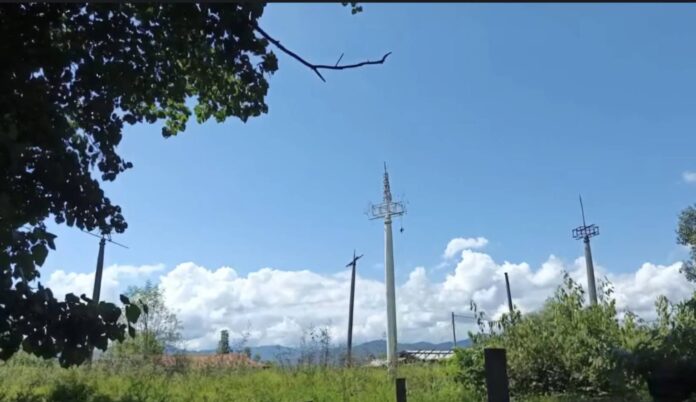
Htwe Reh / Kantarawaddy Times
Among the nine ethnic subgroups of the Karenni, such as Kayah, Manu Manaw (Kaw Yaw), Kayaw (Preh), Yintale, Kayan, Yinbaw, Zayein, Geko, and Geba, the Yintale are the smallest in population.
Most Yintale people are found in Salelone village in Bawlakhe Township, Kayahpine inside Bawlakhe town, and Wan Aung village in Hpasawng Township.
They are believed to be descendants of ancient inhabitants who lived in the region of old royal settlements. Today, only around two thousand Yintale remain.
According to elders, many Yintale died during the Japanese era from an epidemic known as the “stone disease,” and only a small number survived.
In order to prevent the ethnic group from disappearing, the remaining two thousand Yintale have lived together in the Bawlakhe area.
How has the military coup affected the Yintale?
Before the coup, approximately two thousand Yintale people were living together in one area around Bawlakhe. But after the military seized power in 2021, the community began to suffer heavy impacts.
Due to four years of military attacks and inhumane actions, the number of casualties among the Yintale has reached nearly two percent of their entire population.
“One by one, people lost limbs, were injured, or were killed. Counting everything together, the casualties are around two percent of our population,” said U Hla Thein.
U Hla Thein previously lived in Wan Aung village in Hpasawng Township before the coup. He now lives in a displacement camp where many Yintale are gathering, and is also a member of the camp committee.
“Six or seven have been shot dead by the military. One stepped on a landmine and lost their leg. This is as long as I can remember,” he said.
This is one of the most devastating impacts threatening the disappearance of the Yintale, the smallest ethnic group among the Karenni peoples.
Another impact is that the group that was already on the brink of disappearing is now scattered throughout different places due to military offensives.
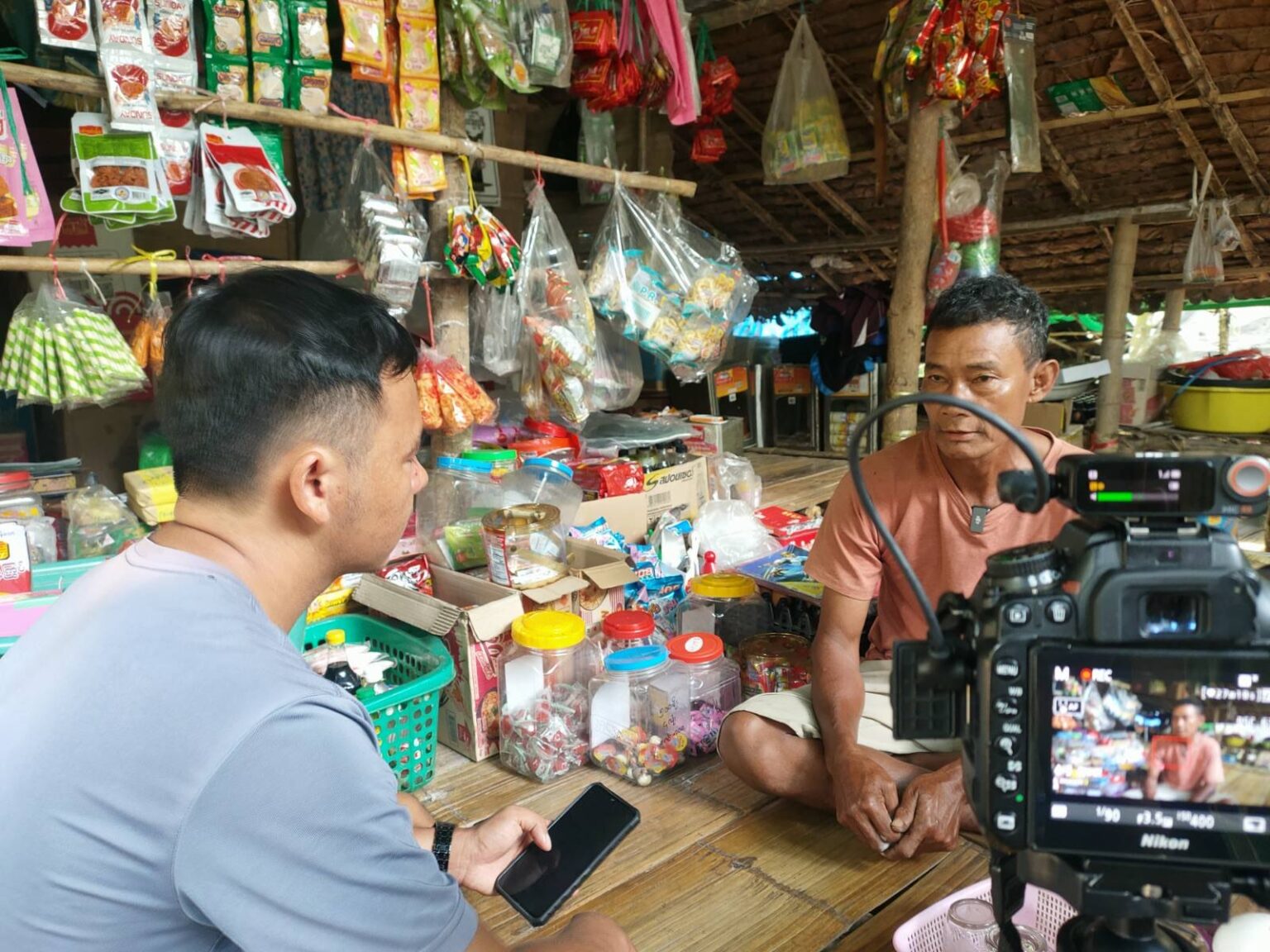
U Htoo Wel, an activist for the Yintale people and also a committee member of an IDP camp, said, “We have homes, but we can’t live there. And as such a small ethnic group, we can’t live together anymore.”
The inability of an ethnic group to live together is a primary path leading to its disappearance.
Military airstrikes and artillery attacks have forced families to flee separately, becoming displaced and distanced from relatives, with many killed along the way.
Daw San San Nwe, a Yintale woman who lost her eleven-month-old daughter after fleeing her home and hiding in the jungle following the coup due to a lack of proper healthcare, shared her feelings.
“I still can’t accept it. I raised her until she was eleven months, and then I lost her. Even now, it hurts deeply. If the political situation were stable, this wouldn’t have happened. We would have had a clinic nearby. If anything happened, we could have gone immediately. But now, my child became seriously ill and we had no motorbike, and the roads were terrible. We couldn’t get her treated in time,” she shared.
Daw San San Nwe firmly believes to this day that if the military hadn’t staged the coup, she would not have lost her child. Her young daughter, suffering the impacts of the coup alongside her mother, died in February 2024 due to untimely medical treatment.
The state of Yintale language and literature
For an ethnic group to survive long-term, its language, literature, and traditions must be preserved.
For the Yintale people, efforts to develop their literature are just recent. Their literature, which only began to take shape during the civilian government era, faced a major obstacle to its expansion due to the coup.
Currently, Yintale people are scattered across IDP camps in Mese Township. Because they are separated, teaching their language has become a significant challenge.
Daw Bar Moe, a Yintale language teacher, said, “If an ethnic group exists, its language must exist too. But now we have the people, while the literature is kind of disappearing.”
After the coup, Yintale communities split into around three locations. Only the camp where Daw Bar Moe lives has a functioning language class. And even there, lessons are not part of the school curriculum. But instead, she teaches Grade 1 to Grade 6 students only twice a week, for about two hours.
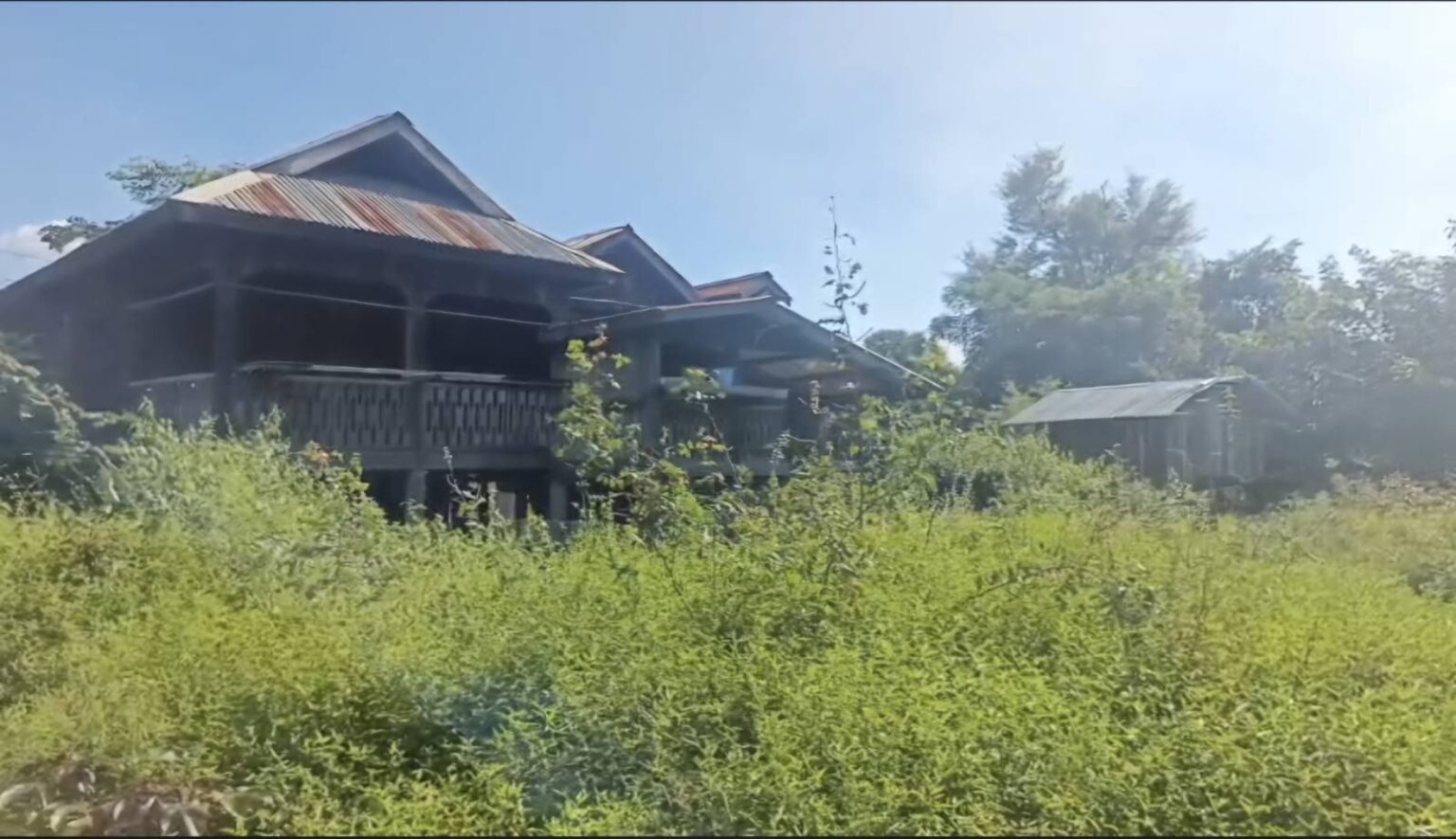
“We teach using the books that are available to us. We ourselves still need more training for a couple of years. Right now, we can only teach by looking at the book,” she explains.
Because the Yintale historically had no written script, they have relied on oral tradition to pass down histories, languages, and customs. Every time an elder dies, parts of their heritage and language disappear.
“Without writing, nothing gets recorded. And when an elder dies, one or two traditional sayings or pieces of knowledge disappear,” said U Htoo Wel, a member of the literature committee.
Among the Yintale population of around two thousand, those who understand their literacy is less than one percent.
“Not even one percent. In our village, there are about eight hundred people. Regarding Yintale literature, it is not just the children; we (adults) should also learn it. I myself haven’t learned it. I also don’t know Yintale literature. I don’t want to refer to others, so I just compare with myself,” he added.
What do the Yintale people worship?
Traditionally, most Yintale are Buddhists and also practice Tagundaing (Kay Htoe Boe). Before the military coup, these traditional Tagundaing could be seen in Yintale villages.
The Kay Htoe Boe features a five-tiered spire with a seinbu (diamond bud) at the top. From the spire, carved wooden decoration hangs down towards the ground. It is the most revered ritual structure in Yintale culture.
But due to displacement, these sacred poles are now hidden within trees and bushes.
“Last year, we managed to hold the Tagundaing (Kay Htoe Boe) ceremony. This year, we can’t. Airstrikes are too frequent,” said U Htoo Wel.
The Tagundaing (Kay Htoe Boe) festival can only be held in a designated, specific area. It cannot be held just anywhere. When the time comes to hold the festival again, they will face a major challenge.
As it is a traditional practice inherited from ancestors, they say they must preserve it by any means possible, no matter how great the challenge.
Tagundaing (Kay Htoe Boe) is not the only tradition facing major challenges. Another traditional festival, the Deeku Festival (Eh Doh Paw Mi), can also no longer be celebrated in a lively and festive way. However, the Deeku Festival does not require a fixed location. Wherever the communities are, they try to preserve the tradition in a modest way so that it does not disappear.
“In the past, before the military seized power, everyone, including elders, youth, and children, could all gather together and celebrate our traditions. We were able to hold our traditional events properly in our village. But now, after more than four years since the coup, it has become very difficult for us to gather. Traveling is also unsafe. Because of that, we have to celebrate in this general way. This festival is actually supposed to last three days and three nights, but now we can only do it for one night and finish everything in a single day. We can’t do it properly, not fully, not well. That’s the difference. We have to minimize everything just to keep the tradition alive,” said U Hla Thein, a member of the Yintale IDP committee, said.
What challenges are the Yintale People facing in the IDP camp today?
As the fighting intensified, the Yintale, like many other ethnic groups, fled to places they believed would be safer.
Some stayed along the banks of the Salween or Thanlwin River to try to sustain their livelihood. But even while living there, they continued to face the military’s airstrikes.
Daw San San Nwe, a woman around 40 years old whose family was working on a small sesame farm by the Thanlwin riverside to survive, said that their place was faced by the military’s airstrike.
“Our hut was hit once, and then the plane came again and dropped more bombs. We lost our belongings again, and all our sesame crops were destroyed,” she said.
Her farm hut was not the only loss. Her warm family home back in Wan Aung village was also burned to ashes by a military airstrike.
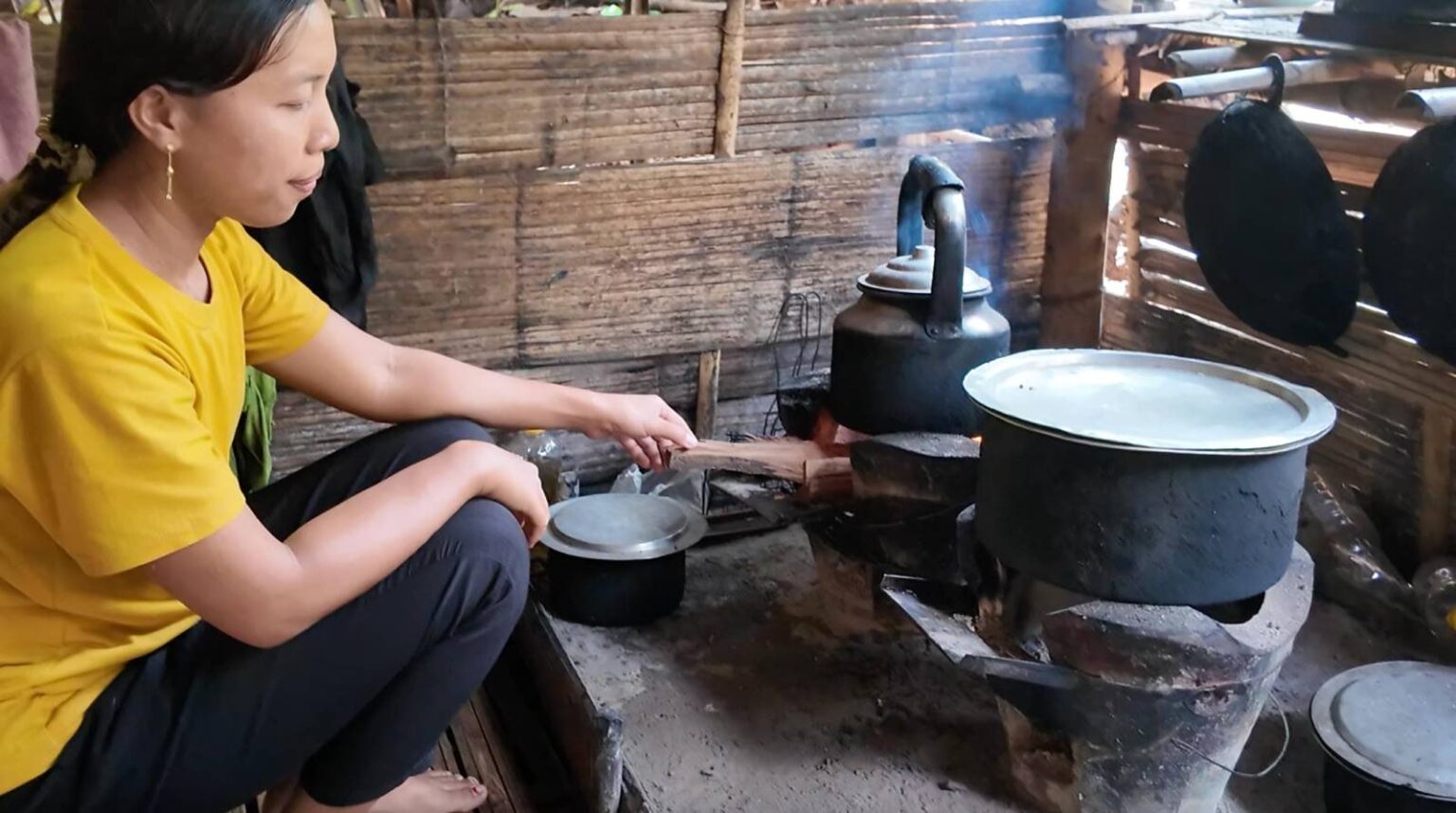
The Yintale, who had survived by staying tightly united to keep their small ethnic group from disappearing, are now scattered. As a result, mutual support among community members has weakened, and many are suffering emotionally as well, said Nyay Mone (Shiyaw), a woman from the Yintale Development Group.
“Even though we once struggled together and survived as a united ethnic group, now our emotional well-being and social development are becoming increasingly important. But because survival and basic needs are now the top priority, we can no longer give attention to those other needs,” she said.
Although they are trying their best to survive, their situation has significantly worsened compared to before the coup.
“In the past, each farmer used to own 10, 15, or even 16 acres of farmland. But now they can only cultivate about 3 acres,” said U Htoo Wel.
As farming activities decline, food shortages have become a bigger challenge. Some families survive by borrowing rice, oil, and salt. Living inside the IDP camp, they have no jobs and no income, and rely solely on donations.
Daw Thein Pwint, a Yintale woman in her fifties facing food insecurity, said, “The biggest challenge we are struggling with is food. We can only eat when donors provide. If there are no donors, we will face hardship.”
What are they doing to prevent their ethnic group from disappearing, and what are their concerns?
To prevent the group from disappearing and to avoid emotional fragmentation, the Yintale committee members meet regularly and organize monthly gatherings, according to U Htoo Wel.
“We hold monthly meetings so that our people do not become divided and so the group does not vanish,” he explained.
During these gatherings, they discuss maintaining unity, understanding politics, and learning how to protect themselves from danger, especially from the airstrikes.
Another concern is that when Yintale individuals marry into other ethnic groups, their children often grow up identifying with the other ethnicity. This can also contribute to the decline of the Yintale population.
“For example, I’m from Wan Aung village, and my husband is from another village. If parents register their children as Kayah instead of Yintale, then the Yintale identity disappears. That’s how our people are decreasing. But if the child is registered in our village, it can help increase our numbers. One reason our population is declining is because of this,” explained Daw Bar Moe, a Yintale literature teacher.
Therefore, when interethnic marriages occur, the Yintale encourage their children to learn the Yintale language, literature, and traditions so that the next generation can continue the Yintale lineage.
Committee members also emphasized that young people have the freedom to choose whom they marry, and no restrictions are imposed on that.