




Kantarawaddy Times
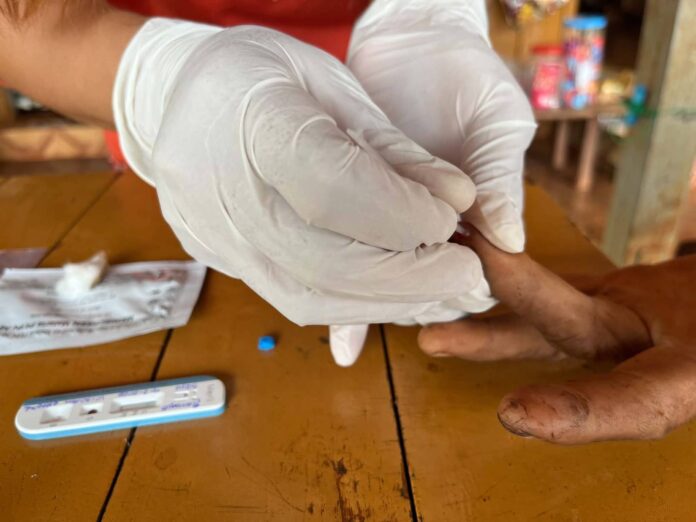
Malaria and dengue fever continue to spread among displaced people in Karenni State to this day. While current conditions make it hard to eliminate these diseases, the Interim Executive Council (IEC)’s Health Ministry director, Saya Philip, told Kantarawaddy Times that they will keep doing everything they can on both prevention and treatment.
“I don’t think it’s easy to eliminate. Reducing it is something the previous government also did a lot of. But under the current circumstances, even though we have a plan, it’s hard to carry out. Why? Because people are hiding in the forest without proper shelter, exposed to mosquitoes. It’s hard to do this work under these conditions. But that doesn’t mean we’re giving up — we’re doing everything we can on prevention and on treating malaria,” Saya Philip said.
He added that while malaria cases could continue through the rainy season, no deaths from malaria or dengue have been recorded so far.
Malaria and dengue have been occurring since the start of the rainy season last June and continue today. Both diseases recur in Karenni State every year and remain an annual health problem for local residents.
Since malaria and dengue are mainly transmitted by mosquitoes, the simplest way to prevent them is to avoid mosquito bites, said Dr. Ye Zaw, who provides health services on the ground.
“For us, it’s quite simple — both dengue and malaria are caused by mosquitoes. If you don’t get bitten, there’s nothing to worry about. So if we do what’s needed to avoid mosquito bites, these diseases will naturally go away,” he said.
A health worker providing care in displaced-persons camps in Shadaw Township said malaria and dengue are still occurring there as well.
“It’s the same on this side. But it’s better than in previous months. In the months when fighting was happening, about 10 people a day would come down with it. Now there are days with only 3 cases. It’s still happening, but it’s eased somewhat,” the health worker said.
According to data compiled by the Karenni Human Rights Group (KnHRG), around 300 people were infected with malaria in Karenni State last June, and medicine shortages remain a challenge for treatment due to transportation difficulties.