




Kantarawaddy Times
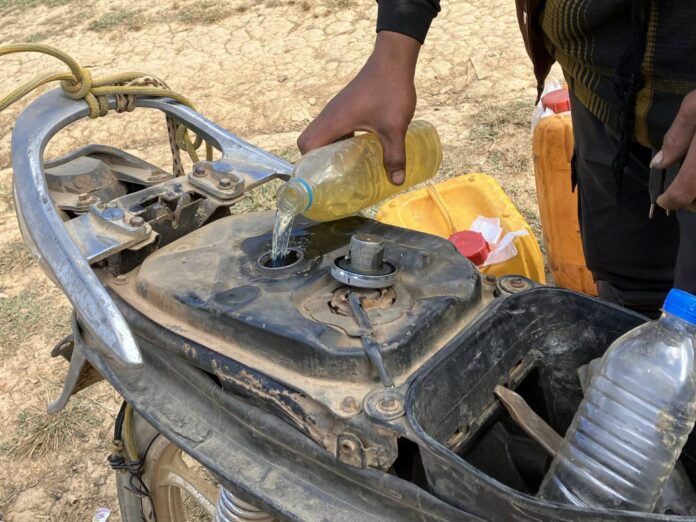
The Interim Executive Council (IEC) of Karenni State has announced a tax exemption on the import and transportation of fuel as part of fuel-saving measures, according to an official from the IEC’s Department of Planning, Finance, and Taxation.
“IEC has set the tax exemption period for fuel import and transportation from March 20 to June 20,” the official said.
The exemption will last for three months and applies only to checkpoints controlled by the IEC. According to U Banyar, Secretary-2 of the IEC, this measure is intended to help the people of Karenni State to cope with rising global oil prices, which have been affected by ongoing conflicts in the Middle East.
However, a female fuel importer said that routes not covered by the exemption still require regular tax payments.
“No matter what goods we transport, we have to pay taxes at two checkpoints. There are no IEC checkpoints, only KA checkpoints. The fees are not calculated by tonnage. They estimate based on the amount of goods, more goods, higher fees, and fewer goods, lower fees,” she explained.
Another fuel importer from Demoso said that while taxes must still be paid at checkpoints along the Taungoo–Demoso highway, no tax is required at IEC and joint-force checkpoints.
She added that it would be better if tax exemptions were implemented at all checkpoints to help reduce domestic fuel prices.
“If there were no taxes, we could sell fuel at lower prices, and consumers would benefit a lot. If possible, it would be much more convenient if all checkpoints were tax-free. Right now, even if we’re asked to lower prices, we can’t because of checkpoint fees. We’re already trying very hard to keep prices from rising,” she said.
Despite the IEC’s tax exemption policy, fuel prices remain high in western Demoso, where locals have to pay around 15,000 kyats per liter of gasoline, which is about three times the normal price.