




Download PDF File – Monthly Summary of Key Events in Karenni ( February 2026)
Human Rights Violations by the Military Junta
Two Airstrikes on Mawchi in One Month, Killing a Woman Over 70
During February, the military junta troops carried out two airstrikes on the Mawchi area in Hpasawng Township, Karenni State. In the first incident, at around 1:00 a.m. on February 5, a village was bombed by aircraft. A woman over 70 years old was killed instantly, and several houses were damaged.
On February 20, the military launched a second round of airstrikes targeting two locations in Mawchi. There were no civilian casualties in that attack. Although there has been no active fighting in the Mawchi area, local residents say they are living in fear due to frequent aerial bombings by the military.
Due to security concerns, the Loepwarkho District Joint Administrative Committee announced that recruitment of mining workers in Mawchi was suspended indefinitely starting February 9. Existing workers will be screened, and movement in and out of the area has been restricted. Since the coup, there have been over 20 airstrikes by the military in the Mawchi area, resulting in at least 50 deaths.
Pregnant Woman Killed by Artillery Fire in Hpruso Township
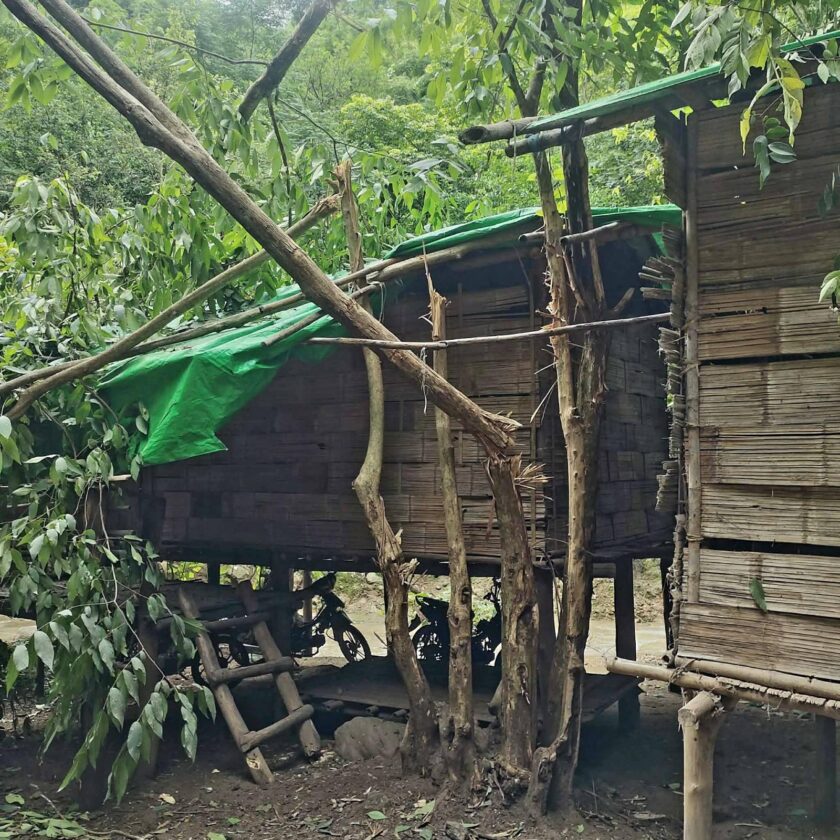
In Hpruso Township, along the Union Highway, the military has been conducting ground operations and launching airstrikes, drone attacks, and artillery shelling in areas where civilians are present, leading to civilian casualties.
In February, a pregnant woman was killed, and three other civilians were injured.
On February 12, artillery fire launched by the military struck an internally displaced persons (IDP) camp near the border of Hpruso and Bawlakhe townships, killing a pregnant woman in her 40s. On February 15, the same IDP camp was attacked again by drone strikes, injuring one man.
Additionally, on February 26 at around 2:00 p.m., heavy artillery fired from Military Advanced Training School No. 14 landed and exploded inside a village in Hpruso Township, damaging a hall building, according to local residents.
Similarly, on February 27, three locations in Hpruso Township were bombed by aircraft, injuring two civilians. The injuries were reported as not serious.
Currently, the military is advancing toward Hpruso and Bawlakhe. Due to their tactics, which include setting up long-range patrol bases and using heavy artillery and aircraft, residents from several villages have been forced to flee.
36-Year-Old Man Killed by Drone Strike in Eastern Demoso
On February 18 at around 9:30 a.m., the military carried out a drone bombing on a village in eastern Demoso Township, Karenni State, killing a local man.
According to a local resident, the man was at his home when the drone bomb struck and exploded, hitting him in the neck and causing his death. The deceased was 36 years old and a village official.
Two Displaced Children Injured by Drone Strike in Eastern Loikaw
On February 14 at around 11:00 a.m., a military drone dropped a bomb on an IDP camp in eastern Loikaw Township, Karenni State, injuring two displaced children.
The children were running to a bunker after hearing the drone, but the bomb exploded and injured them. Their injuries are not considered serious.
One Man Killed by Artillery Fire in Western Moebye
On February 6 in the morning, artillery shells fired by the military landed outside a village in the northwestern part of Moebye, Pekhon Township, along the Shan–Karenni border, killing one man, according to a local resident.
Two 120mm artillery shells exploded, injuring one villager and killing another.
Throughout February, the military continued conducting airstrikes, artillery shelling, and drone bombings not only along the Shan–Karenni border but also across Karenni State.
Human Remains Recovered from Abandoned Well and Given Burial in Western Demoso
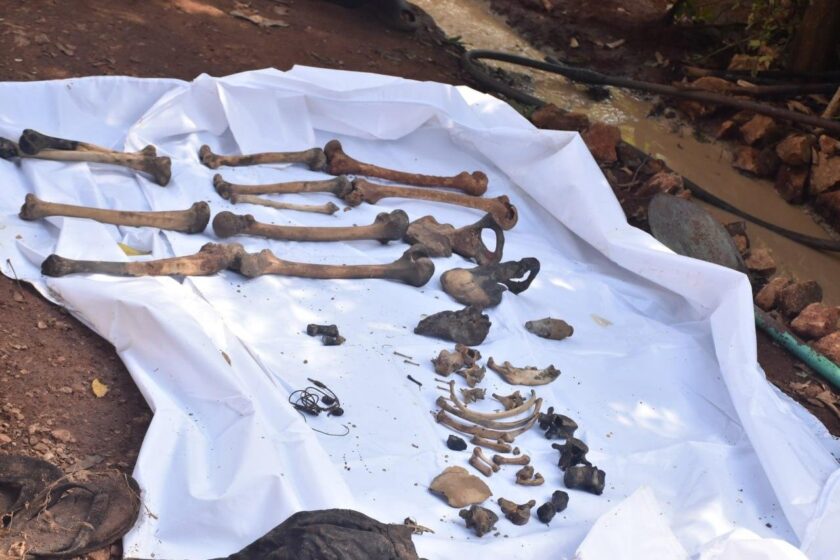
In western Demoso Township, Karenni State, skeletal remains found inside an abandoned well in a village were recovered and given proper burial on February 11, according to local residents.
Before the launch of “Operation 1111” in late 2023, military troops had been stationed in the area. During that period, there was an incident in which nine civilian villagers went missing after returning to retrieve belongings or check on their homes.
The recovered remains were fragmented, making identification impossible. However, based on the bones and clothing found, local residents believe the remains may belong to at least four individuals, all of whom are civilians.
Arsenic Contamination Poses Serious Health Risks
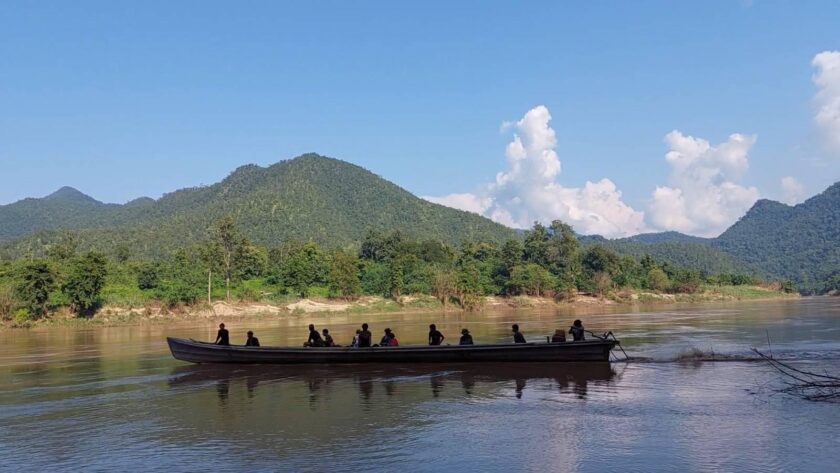
IEC Warns Against Consuming Water and Aquatic Life from the Salween River and Molo Creek
The Karenni State Interim Executive Council (IEC) has issued a public health warning advising people not to directly drink or use water from the Salween River or Molo Creek for cooking. After any contact with the water, people are urged to wash with clean water.
The IEC also instructed the public not to cook or consume aquatic animals from the Salween River, including fish, snails, shrimp, prawns, turtles, and other species. As for Molo Creek, the IEC strongly warned that no aquatic animals from the creek should be consumed under any circumstances.
The council urged the public to continue following these precautions until further notice and to cooperate with health measures.
In collaboration with the Environmental Research Department of Chiang Mai University, the IEC collected river water samples between December 18 and 24, 2025, from 10 locations along the Salween River basin flowing through Karenni State and from one site on Molo Creek.
Laboratory testing revealed arsenic contamination levels exceeding international safety standards. According to the results, arsenic concentrations in the Salween River ranged from 0.042 mg/L to 0.096 mg/L, which are significantly higher than the international safety limit of 0.01 mg/L for dissolved arsenic in drinking water.
Water samples from Molo Creek showed arsenic levels as high as 0.553 mg/L, which is 55 times higher than the safe limit.
On October 28, 2025, there was an incident in which eight youths who camped along the Salween River experienced dizziness and vomiting after catching and eating fish from the river. Seven of them showed symptoms. This incident underscores the importance of complying with the IEC’s public health warning.
Military Situation in Karenni State and Along the Shan–Karenni Border
Military Junta Regains Control of Hpasawng
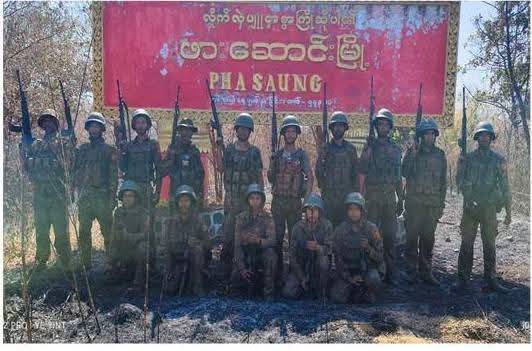
Military junta troops have fully regained control of Hpasawng town in Karenni State on February 15, after revolutionary forces had controlled it for more than a year. The troops are continuing clearance operations within the town, and photographs documenting their presence have been released through state-run media.
The military also retook Light Infantry Battalion (LIB) 135, located near Hpasawng, which had previously been seized by revolutionary forces.
According to the statement from military, clearance operations began on September 30, 2025, advancing from the western side of the Bawlakhe–Htoo Chaung–Hpasawng road.
Revolutionary forces stated that heavy artillery and air support enabled the military to regain the town on February 15.
During attempts to reclaim Hpasawng, the military carried out airstrikes, drone bombings, and artillery shelling near the Salween Bridge on February 4 at around 11:00 a.m.
The day after the military retook the town, allied revolutionary forces destroyed the Hpasawng Bridge to prevent its use by the military.
On February 18, military columns advanced from inside Hpasawng toward the Salween Bridge outside town, prompting revolutionary forces to withdraw. The military subsequently regained control of the bridge.
During the junta’s attempts to recapture Hpasawng, the Salween (Hpasawng) Bridge, Htoo Chaung Bridge, and Pon Chaung Bridge were all destroyed by mine explosions. While the military confirmed that revolutionary forces destroyed the Salween (Hpasawng) Bridge, responsibility for the destruction of Htoo Chaung Bridge and Pon Chaung Bridge remains unverified.
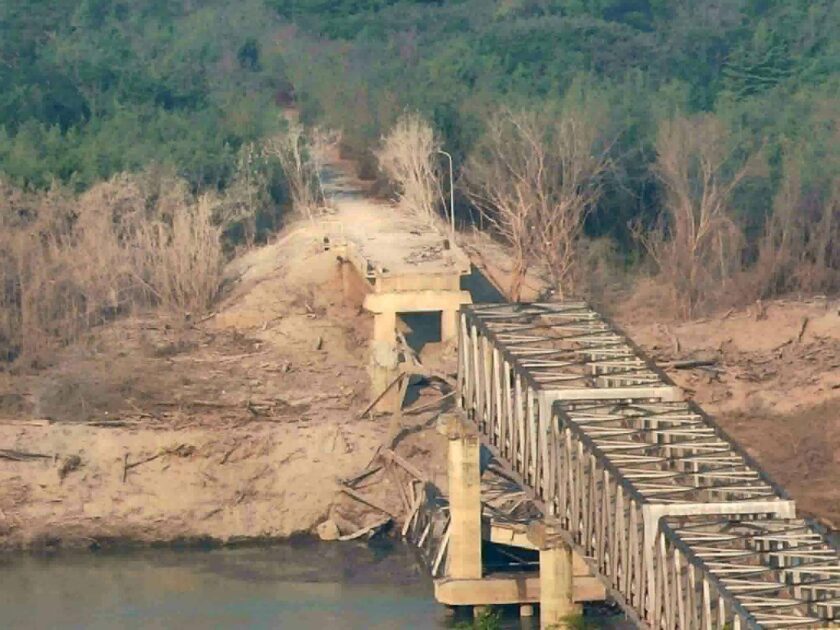
Although the military currently controls Hpasawng town, clashes continue on the ground. Civilians are no longer residing in the town, and only military troops remain. The military stated that 31 major and minor clashes occurred between the two sides during the effort to retake Hpasawng.
Sporadic Clashes in Eastern Loikaw
In the third week of February, clashes occurred between military troops and revolutionary forces in eastern Loikaw Township. One soldier from Battalion 27 of the Karenni Nationalities Defence Force (KNDF) was killed.
Although fighting is not happening daily, Battalion 27 officials reported that sporadic clashes happen from time to time. Military troops are also conducting patrols and inspections within villages in eastern Loikaw Township.
Joint Offensive by Military Junta and PNO Along Shan–Karenni Border
In western Moebye, near the Shan–Karenni border, joint forces of the military and the Pa-O National Organization (PNO) forces launched an offensive in La Maung La and Lway Yin Mingalar villages, according to a statement released by Moebye PDF on February 25.
Along with the offensive aimed at seizing control of the area, there are drone and artillert shelling targeting displaced civilians. Clashes occurred between joint forces and revolutionary groups on February 22 and 23. Moebye PDF has warned civilians not to travel through restricted areas due to the risk of further fighting.
Additionally, on February 13, PNO forces burned down Ban Mat Ywar Thit village in the Kadu Gyi area of Mawkmai Township, southern Shan State, according to the Pa-O National Liberation Army (PNLA). The village was established in 2023 to shelter displaced Pa-O civilians and contained 16 houses with around 100 residents.
On February 14 at around 3:30 p.m., PNO forces allegedly shelled Narhee village in the same area, injuring one man and one woman. The PNLA stated that artillery attacks on villages without active fighting have resulted in civilian casualties and property damage.
Demoso–Hpruso–Htarleh–Nanphe–Bawlakhe Main Road Closed Indefinitely
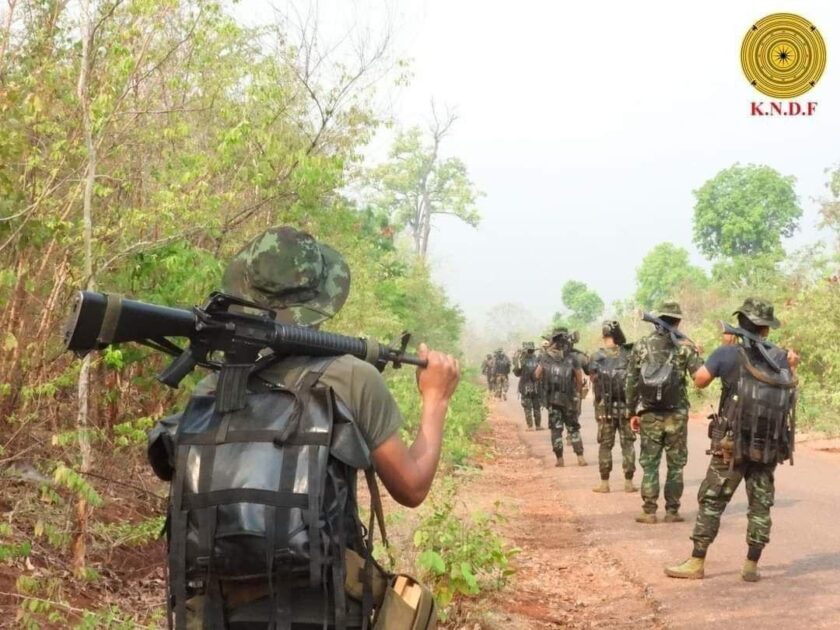
The Karenni Nationalities Defence Force (KNDF) announced on February 6 the indefinite closure of the Demoso–Hpruso–Htarleh–Nanphe–Bawlakhe highway, urging the public not to use the road under any circumstances.
The announcement cited security concerns, as military columns have advanced not only along the main Nanphe-Bawlakhe road but also along smaller connecting routes. Due to the evolving ground situation, the road will remain closed indefinitely, and civilians are advised to avoid traveling in the area.
Calls for the Formation of a Single Armed Force
Nanmaekhon Township Authorities and Public Urge a Unified Armed Force in Karenni State
On February 3, the Nanmaekhon Township Joint Administrative Committee issued a statement calling upon the various armed revolutionary forces and organizations within Karenni State to prioritize efforts toward forming a single unified armed force, in line with the wishes of the people.
The committee stated that the public recognizes the sacrifices, in blood, sweat, and lives, made by revolutionary forces in the fight to establish a federal democratic system and to end dictatorship as quickly as possible. It also noted that, five years after the military coup, civilians continue to endure and face countless hardships and suffering due to the consequences of war.
The statement emphasized that divided armed groups should look toward the future interests of the people, stressing that “unity is strength, and only through strength can objectives be successfully achieved.” It urged all groups to make serious efforts toward forming a single armed force as soon as possible.
Similarly, residents of Loinanpha Township have also organized and sent letters to relevant organizations calling for the establishment of a unified army.
Letters requesting the formation of a single armed force have been sent to revolutionary forces, including the Karenni State Consultative Council (KSCC), the Karenni National Progressive Party (KNPP), the Karenni Army (KA), the Karenni National People’s Liberation Front (KNPLF/KPLA), the Karenni National Solidarity Organization (KNSO/KNSA), he Karenni National Peace and Development Party (KNPDP/KNPDA), the Karenni Interim Executive Council (IEC), the Demoso Local PDF (DMO Local PDF), and the Karenni Nationalities Defence Force (KNDF).
Civilians, youth groups, and revolutionary forces are calling for the implementation of a single defense force in Karenni State. Efforts are underway to establish the “United Karenni State Army (UKSA)”, and negotiations between armed groups are ongoing.
Long-standing Skin Irritation Problems
Skin Irritation Affects People of All Ages
In a village within the Dawtamagyi village tract in eastern Demoso Township, Karenni State, residents report that skin itching and irritation are occurring due to water shortages.
Due to the water scarcity, not only school-aged children but also elderly residents are experiencing skin irritation. In January, approximately 60 schoolchildren in the village developed skin itching due to poor personal hygiene caused by water scarcity, according to a schoolteacher.
Residents say water donors are urgently needed so that proper hygiene can be maintained to reduce skin conditions.
Similarly, internally displaced children and local residents in eastern Hpruso Township are also suffering from skin irritation. Due to military operations, displaced families have taken shelter in villages in eastern Hpruso. Both displaced people and local residents are experiencing skin problems.
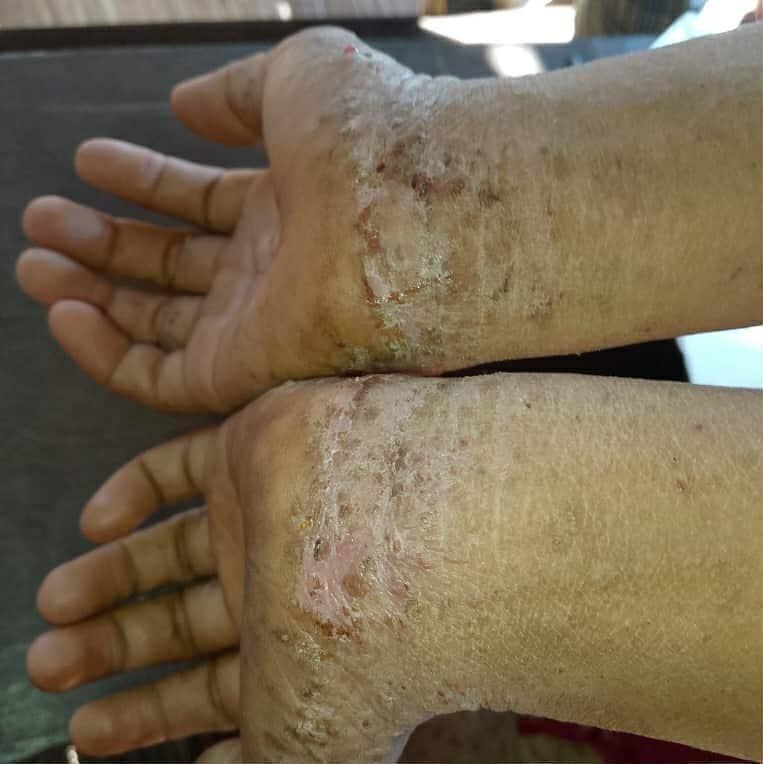
Although basic treatments and locally available medicines are being used, the condition has not significantly improved.
Villages in eastern Hpruso face water shortages every summer, preventing residents from maintaining proper personal hygiene. Many report itching on their hands, bodies, and thighs due to infrequent bathing. Living in remote mountainous areas also makes access to medical assistance difficult.
Frontline revolutionary fighters are also suffering from similar skin conditions, some for several years. They believe the primary causes are limited water access and the inability to choose proper food.
Crime
16-Year-Old Boy Drowns at Loinanpha Dam
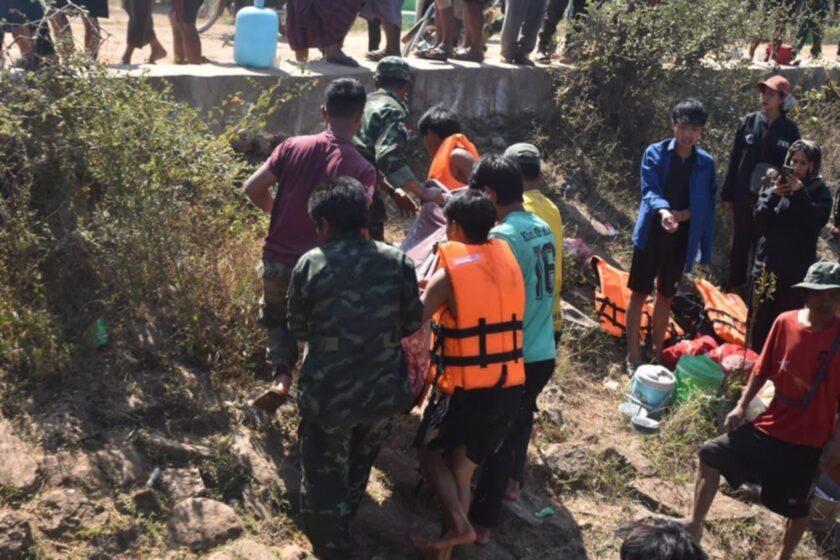
A 16-year-old boy drowned at Loinanpha Dam in western Demoso Township, Karenni State, at around 5:30 p.m. on February 7.
The victim, identified as Hein Htet Aung, drowned while swimming with friends. Displaced people, local residents, and the Emergency Rescue Department under the IEC’s Ministry of Home Affairs jointly conducted search operations.
Hein Htet Aung was displaced from Pankan village in Loikaw. After searching throughout the night, his body was recovered at around 11:00 a.m. the following day.
29-Year-Old Man Drowns in Dawnoeku Loikaw
A 29-year-old man drowned in Min Kyaung Lake, located in the Dawnoeku ward of Loikaw town, Karenni State.
His body was found on the morning of February 12 and recovered by a local social assistance organization, according to residents. According to locals, the man was 29 years old and a resident of Dawnoeku ward.