




Saw Eh Kanyaw / Kantarawaddy Times
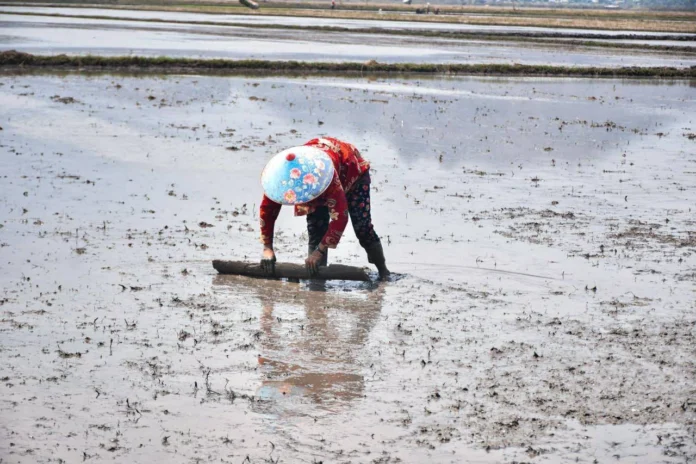
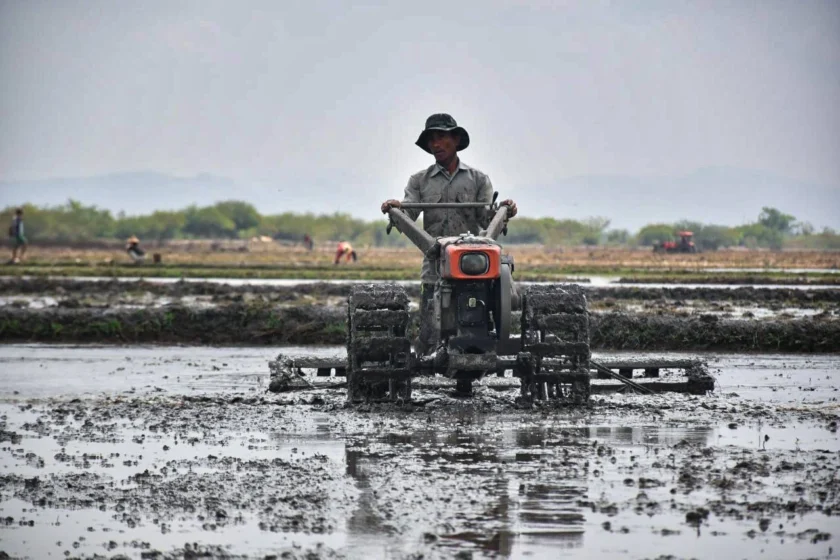
Under a sky thick with dark clouds, Karenni farmers are preparing their fields for rice planting by plowing with tractors, transplanting seedlings, and shaping the paddy boundaries. Their region borders Shan State.
Despite the dangers posed by ongoing military offensives, artillery shelling, and drone bombings targeting civilians, they cannot afford to stop farming.
Agriculture is the primary livelihood of local people, so even in unsafe conditions, farmers must return to their fields.
“When we hear artillery fire from Moebye, the mornings are very busy. People are plowing, and you can hear the sound of tractors everywhere. But by the afternoon, many farmers look at each other and rush back home,” a female farmer explained, describing how they work under life-threatening conditions.
Rice cultivation is essential for the people of Karenni State. A local woman shared the consequences if they are forced to flee without being able to harvest.
“Right now, we are planting earlier than in previous years to ensure we can harvest. But if we have to run away without harvesting, we will fall deeper into debt. It means we’ll be trapped in debt,” she said.
As she spoke while preparing her fields, worry was clearly visible on her face.
Over more than five years since the coup, many have been displaced, struggling to survive amid food shortages and constant threats to their lives.
As aid supplies continue to decrease, people are increasingly trying to grow their own food despite the risks. Some have even taken loans to afford farming costs.
However, due to the current situation, locals say it is very difficult to carry out farming as usual.
There are fewer safe areas to farm, and the cost of inputs like fertilizers and pesticides has risen sharply. Fuel prices for agricultural machinery have also increased, creating further hardship for farmers.
“When we are in the fields, and if fighting breaks out in Moebye, we can hear everything, including heavy and small weapons. I’m especially afraid of artillery shells landing in the fields. And if troops advance, I worry they might pass through our fields,” another woman farmer said.
Some displaced people have left their homes but return to the farm whenever the opportunity is given.
In muddy fields, plowing and planting young rice shoots reflect the lives of people striving to sustain their livelihoods despite instability.
The summer rice they are planting is crucial. It can provide food for both displaced people and local residents, and any surplus can help cover family expenses.
However, many areas still cannot plant summer rice, and in some places, farming has been impossible since the coup began.
As a result, many people in displacement camps remain unemployed, struggling to survive by taking whatever work they can find.
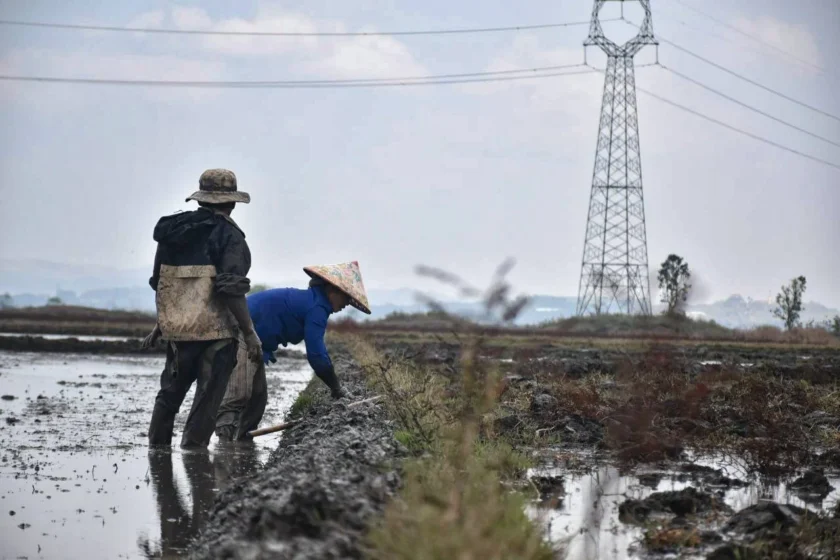
Even those who are able to farm are not at ease. Their hope is simply to harvest what they have planted.
Yet many remain hesitant to plant at all. They fear that military troops might arrive before harvest, forcing them to abandon their crops, or that artillery and drone attacks might destroy their fields. These fears create a deep internal conflict, leaving many unsure whether to plant rice again.