




Kantarawaddy Times
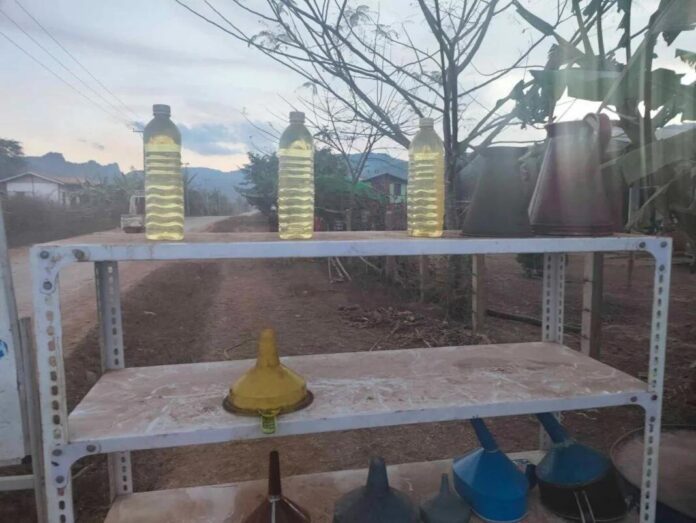
At the beginning of April, fuel prices in Karenni State have tripled. As recently as March 30, the price per liter rose to around 10,000 kyats, but it has now increased further to between 12,000 and 15,000 kyats across different areas, according to local residents.
The rise in fuel prices is directly affecting the cost of basic food items, the economy, and people’s livelihoods, causing growing concern among communities throughout Karenni State. Displaced families with no stable income are being particularly impacted, while salaried workers say their wages no longer match the rising cost of living.
“As someone who relies on a salary, when I get paid, I buy one sack of rice and a few other items. After that, daily living becomes much harder. There’s also fear of running out of fuel. Sometimes we buy one or two bottles of fuel with the money we have, but then we run out of money for other needs. Salaries are no longer enough, and the fear of running out of fuel is very stressful. Now, I even walk to work instead of using a motorbike,” said an office worker from Hseebu.
Many small businesses, including those selling fuel on a small scale, have shut down, locals said. The Karenni Interim Executive Council (IEC) has begun implementing some measures to address the fuel crisis.
In particular, the IEC is working to reduce the burden by not collecting taxes on imported fuel and by encouraging its staff to work from home to cut fuel consumption, according to IEC Secretary-2 U Banyar.
“We have informed township authorities to manage fuel distribution as effectively as possible for local communities. One certain thing is that we will not set fixed prices. Prices will follow global market rates. However, we are focusing on preventing unnecessary overconsumption and minimizing taxes as much as possible,” he said.
U Banyar added that rising fuel prices are a complex issue that is difficult to manage even at the national level. Currently, due to conflicts in the Middle East, many regions across Asia are experiencing increasing commodity prices driven by higher fuel costs.
Even in Thailand, a neighboring country of Myanmar, fuel prices have also risen, leading to higher costs for basic goods and increased transportation and energy-related expenses.