




Kantarawaddy Times
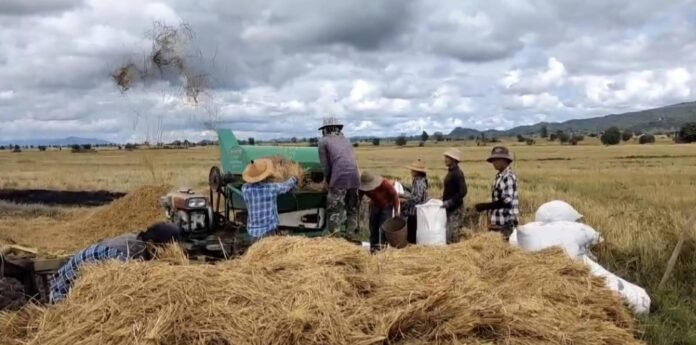
Rice farmers in village tracts in the eastern part of Demoso Township, Karenni State, say they are still facing difficulties repaying harvesting and machine rental fees because there are no buyers for the paddy they have cultivated. As a result, they are hoping to be able to sell their rice soon.
A rice farmer stated that, due to the lack of buyers, they have been unable to cover harvesting costs, while rising commodity prices from all sides are exacerbating their hardship.
“We are hoping to be able to sell our paddy, but there are no buyers. The rice is still being stored. In the eastern part of Demoso, there are rice mills, but they are not buying. Brokers also don’t come to purchase. We still owe machine-harvesting fees from before. With commodity prices rising, we want to sell our paddy just to manage our daily livelihoods. When no one is buying, we face many difficulties,” a rice farmer said.
Although there are rice mills in eastern Demoso Township, they are no longer purchasing paddy. In some places, only small amounts are being bought, and even then, buyers can offer only around 1,800 kyats per viss of paddy.
Another male rice farmer also said that since the harvest time, he has been unable to pay machinery fees because he cannot sell.
“Even mine hasn’t sold a single bag since harvest. We need money to pay machine fees and other costs, but we don’t have other farmland or income sources, so we are still facing serious difficulties,” he said.
Because rice farmers have no other sources of income, they can only prepare for the next planting season if they are able to sell their paddy. He added that if there are no individuals or organizations to purchase theirs, farmers may face even greater hardship in the coming season, and some may reduce the amount of rice they plant.
To help resolve the difficulties faced by local farmers, the Karenni State Interim Executive Council (IEC) plans to begin purchasing rice in February, according to IEC Secretary (2) U Ba Nyar.
“We have set a rice price for the public. A fair price has been determined so that no one suffers losses. Farmers can mill their paddy at rice mills or mill it themselves, and then sell the rice at the designated locations we specify. The details will be discussed further in meetings with the relevant township officials,” U Ba Nyar said.
He added that the IEC will not directly purchase paddy, but will buy milled rice instead, with plans to purchase at least around 1,500 bags.
Depending on rice varieties, Shwe Yin Aye and Shwe Aa (25 viss) are temporarily set at around 95,000 kyats, while Yarkoe (25 viss) is set at around 90,000 kyats. Further details will be discussed by relevant township public relations officers, administrative teams, and responsible officials.