




By Kantarawaddy Times
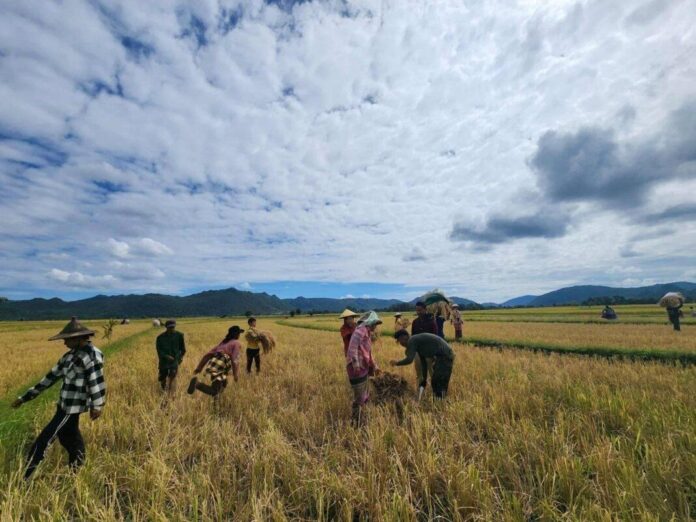
Residents report that ongoing clashes in Loi Lin Lay town, Loikaw Township, Karenni State, have prevented them from harvesting the crops they planted.
A woman from Loi Lin Lay, who is currently taking shelter due to the conflict, said that daily fighting between junta forces and resistance groups has made it too dangerous for farmers to collect their rice and corn.
“Some people can harvest if their fields are far from the fighting, but those with farms near the conflict areas cannot harvest at all. When farmers try to return to their fields, the junta fires heavy weapons. Because of the ongoing clashes and danger, resistance forces have advised us not to go back. Since we cannot harvest in time, the corn will soon be impossible to save, and the fighting is getting worse,” she said.
Local sources estimate that more than 20 acres of rice fields and around 40 acres of cornfields in and around Loi Lin Lay remain unharvested. Residents say clashes have become more frequent and intense as the military council’s planned election approaches.
In nearby Pruso Township, around 50 acres of rice fields also remain unharvested after junta troops planted landmines along routes leading to hillside farms, preventing farmers from accessing their fields, according to U Ah Tho Nyo, a resident from eastern Pruso.
“When we plant rice and the yield is poor, we already struggle to have enough food for the entire year. But this year we could not harvest anything at all, which means we have lost our whole year’s food supply,” he said.
Farmers who are unable to harvest their rice say they will have to borrow rice from relatives to support their families in the coming year.
Karenni State currently hosts more than 200,000 internally displaced people, most of whom have no access to farmland and rely heavily on rice donations from humanitarian organizations for their survival.