




By Kantarawaddy Times
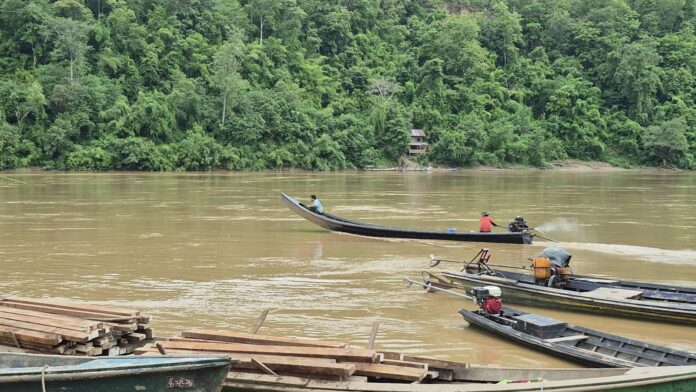
The Karenni Interim Executive Council (IEC) has issued a public advisory on February 25, urging residents not to use water from the Salween River and Molo Creek in Karenni State due to arsenic contamination. The advisory also outlines precautionary measures for those who are unavoidably required to use the water.
According to the IEC, arsenic (As) concentrations in the Salween River, which flows through Karenni State, and in Molo Creek, which originates from the Mawchi area, have reached hazardous levels.
U Banya, Secretary-2 of the IEC, told Kantarawaddy Times that avoiding the use of the contaminated water is the safest option due to the serious health risks posed by arsenic exposure.
“Arsenic is a substance that can adhere to the human body upon contact. It does not simply dissolve and disappear in water. Instead, it attaches to sediments and particles in the water, which can come into contact with our skin or enter the body through drinking. This can lead to cancer and symptoms such as dizziness and vomiting. Therefore, the best course of action is to avoid drinking or using the water whenever possible. If contact occurs, it is important to wash thoroughly with clean water,” U Banya explained.
The advisory states that short-term exposure to arsenic-contaminated water may cause dizziness, nausea, vomiting, abdominal pain, diarrhea, and muscle cramps. Long-term exposure may result in liver cancer, lung cancer, bladder cancer, skin cancer, heart disease, hypertension, diabetes, respiratory illnesses, and neurological disorders. In children, arsenic exposure can impair cognitive development and memory.
The IEC clarified that the current directive serves as a public awareness measure. Further health education initiatives will be carried out in coordination with health authorities.
“We plan to coordinate with health personnel in various townships to implement additional public health awareness activities. The Health Department will take the lead in these efforts,” U Banya added.
The IEC has advised the public not to directly consume or use water from the Salween River and Molo Creek for drinking or cooking. Those who come into contact with the water are urged to wash thoroughly with clean water afterward. The advisory also warns against consuming aquatic animals from the Salween River, including fish, snails, shrimp, freshwater prawns, and turtles. Consumption of any aquatic animals from Molo Creek is strictly prohibited.
The IEC further urged the public to comply with these health measures until a revised advisory is issued and to cooperate with health-related prevention efforts.
Water samples were collected between December 18 and December 24, 2025, from 10 locations along the Salween River within Karenni State and one location along Molo Creek. The sampling and laboratory analysis were conducted jointly by the Karenni Interim Executive Council and the Department of Environmental Research at Chiang Mai University.
Laboratory results indicate that arsenic concentrations in the water ranged from 0.042 mg/L to 0.096 mg/L, exceeding the international safety standard of 0.01 mg/L (0.01 milligrams per liter).
In Molo Creek, arsenic levels were found to be as high as 0.554 mg/L — approximately 55 times higher than the internationally accepted safety limit.